Busan Sea Bus: Riding the Ocean Ferry (2026)
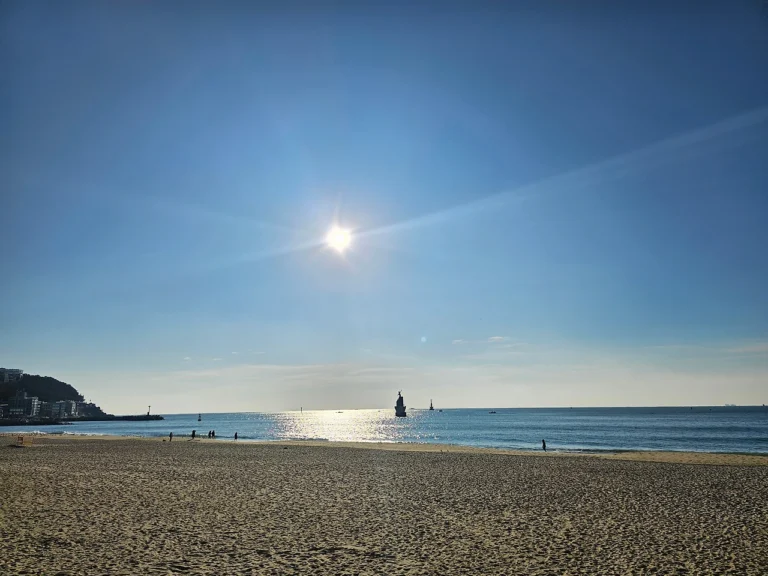
I first spotted the Busan Sea Bus ferry from my apartment window in Haeundae — a white vessel sliding east along the coastline, smaller than I expected. No idea at the time it was a public ferry you could just walk up and board. Now, a couple of times a year, I ride it end-to-end when friends visit from abroad and want to see the coastline without sitting on a bus. Takes longer than the subway. But it’s a completely different experience.
This guide covers everything before you board: routes, stops, ticket prices, schedules, and the things no other blog bothers to mention.
What Is the Busan Sea Bus?
The Sea Bus (부산 씨버스, pronounced ssee-buh-seu) is a coastal passenger ferry connecting five stops along Busan’s shoreline. Think of it as a sea route that loosely mirrors the coast — starting at Haeundae in the east, ending at Jagalchi in the west.
The five stops:
- Haeundae (해운대) — eastern end, near the beach
- Gwangalli (광안리) — in front of Gwangalli Beach and the bridge
- Oryukdo (오륙도) — at the Oryukdo Skywalk area, southeast coast
- Songdo (송도) — near Songdo Beach and the cable car
- Jagalchi (자갈치) — western end, right next to Jagalchi Fish Market
Board at any stop, exit at any stop. So it’s not purely a tourist loop — it can be a practical way to get from Haeundae to Jagalchi for lunch without touching the subway at all.
For context on the Haeundae area, see the Haeundae beach guide.
Schedule and How Long Each Leg Takes
The ferry runs in both directions, with departures roughly every 60–90 minutes depending on the season. Summer (June–August) has more frequent service. Winter has fewer, and some departures get cancelled when seas are rough.
Rough timing per leg:
- Haeundae → Gwangalli: about 20 minutes
- Gwangalli → Oryukdo: about 25 minutes
- Oryukdo → Songdo: about 35 minutes
- Songdo → Jagalchi: about 15 minutes
- Full route (Haeundae → Jagalchi): about 90–100 minutes
First departures from Haeundae typically start around 10:00 AM — though that’s worth confirming before you head out. The last ferry usually departs by around 5:00–6:00 PM. Always check the schedule on the day you plan to go; weather cancellations happen with little warning, especially in autumn and winter.
I use Naver Map to find the nearest terminal and check current hours. If you’re not familiar with it, here’s a quick guide on how to use Naver Map in English.
Ticket Prices and How to Buy
Fares are distance-based. As of early 2026, approximate adult prices are:
| Route | Adult (one-way) |
|---|---|
| One stop (e.g. Haeundae → Gwangalli) | around ₩5,000 |
| Two stops | around ₩7,000 |
| Full route (Haeundae → Jagalchi) | around ₩12,000 |
Children aged 6–12 get a discount. Kids under 6 ride free. Round-trip tickets are available if you’re backtracking the same way. These prices can change — verify at the terminal window before boarding.
Buy tickets on-site before boarding. The Sea Bus runs on its own ticketing system — no T-money card tapping like the subway or city buses. Bring cash or a Korean debit/credit card. More on payment options in this guide on paying in Korea with cash, card, or phone.
No advance booking needed for regular departures. Arrive 15–20 minutes before your ferry and buy at the window.
Boarding at the Haeundae Terminal
The Haeundae terminal sits near the eastern end of Haeundae Beach, close to the main pier. The address is 부산 해운대구 해운대해변로 일대 (Haeundae Haebyon-ro), near the Haeundae beach pier. From Haeundae subway station (해운대역, Line 2, Exit 3 or 5), walk toward the beach — about 10 minutes on foot.
The first time I went, I nearly walked past it entirely. It’s a small blue-and-white building; ticket window on the ground floor, modest indoor waiting area. On summer weekends, arrive earlier than you think you need to. The ferry has limited seating, and the 11:00 AM and 1:00 PM departures fill up faster than the others.
What to Expect on Board
The vessel is clean and modern — indoor seats (air-conditioned in summer, heated in winter) and an open deck at the stern. I always go outside. The view of Gwangalli Bridge (광안대교) from water level hits differently than anything you see from shore; the bridge fills your entire field of view in a way that’s hard to describe until you’ve done it.
There’s a toilet on board. No food or drink service though — grab something before you board if you want a snack for the ride.
Most days the ride is smooth. That said, I once arrived on a rough autumn afternoon to find a handwritten sign on the door saying service was suspended due to wind. No online notice. Nothing. If you’re travelling in autumn or winter, call the terminal or check conditions before making a special trip out there.
Which Stop Should You Get Off At?
Depends entirely on what you want to do afterward. Here’s how I think about each one:
- Gwangalli (광안리) — Best for a relaxed afternoon. Walk the beach, get coffee, watch the bridge lights come on in the evening.
- Oryukdo (오륙도) — Worth it if you want to visit the Oryukdo Skywalk (오륙도 스카이워크), a free glass-bottomed walkway over the sea cliffs. Fair warning: this stop is genuinely isolated. There’s no easy subway connection — you’ll need a bus or taxi to move on, and food options in the area are limited.
- Songdo (송도) — Good combination with the Songdo Sky Cable Car (송도 해상 케이블카), which gives you a different perspective on the same coastline, this time from above.
- Jagalchi (자갈치) — My favourite endpoint. The terminal is a 5-minute walk from Jagalchi subway station (자갈치역, Line 1, Exit 10), and Jagalchi Market (자갈치시장) is right in front of you — fresh raw fish (회, hoe) and grilled seafood at a reasonable price.
A Few Practical Notes
First, compare journey times before you commit. Haeundae to Jagalchi by subway is 40–50 minutes with one transfer. The Sea Bus is 90+ minutes. On a clear, sunny day that extra time on the water is genuinely worth it. But on an overcast day with nothing to see? Honestly, just take the subway — the view is the whole point, and without it you’re sitting on a slow boat for an hour and a half for no particular reason.
Second, the Oryukdo stop needs a plan. Onward transit is limited, so if that’s your destination, sort out how you’re getting somewhere afterward before you arrive.
Third, this is a seasonal service. Summer is the easiest time to use it — more departures, better weather, longer daylight. Winter is a real gamble, especially for cancellations.
Finally, once you’re back on shore, the subway is the most straightforward way home. For a full breakdown of fares and how to top up your card, see the Busan subway and T-money guide.
Last verified: April 2026 · Sources: Visit Busan, Naver Map – 부산씨버스
Prices, hours, and details change frequently. Please verify on the official website before visiting.