Busan Transit Complete Guide: Every Way to Get Around (2026)
Busan is a sprawling port city, and figuring out how to get around can feel overwhelming when you first arrive. I’ve tried all of these options — often multiple times in the same day — and this guide breaks down every transport mode so you can make smart decisions instead of expensive mistakes.
This is the only Busan transit guide foreigners will ever need: subway, bus, taxi, airport limousine, sea bus, and city tour — all compared side by side, with honest takes on each.
Master Comparison: All Busan Transport at a Glance
Before diving into each option, here’s the full picture. Use this table to quickly identify what fits your situation.
| Transport | Cost Range | Coverage | Hours | Card Type | Foreigner Ease | Best For |
|---|---|---|---|---|---|---|
| Subway | 1,500–2,400 KRW | City-wide (4 lines) | 05:30–midnight | T-money / Cash | ★★★★★ | Daily commuting, tourist spots |
| City Bus | 1,500–2,000 KRW | Everywhere | 05:00–23:00 | T-money / Cash | ★★★☆☆ | Gaps in subway coverage |
| Night Bus | 2,000–2,500 KRW | Key corridors | midnight–04:00 | T-money / Cash | ★★★☆☆ | Late-night return trips |
| Kakao T Taxi | 4,800 KRW base +meter | Everywhere | 24 hours | App / Card / Cash | ★★★★★ | Any time, no Korean needed |
| Airport Limousine | 7,000–17,000 KRW | Airport → Hotels | 05:00–22:00 | Cash / T-money | ★★★★☆ | Airport arrival/departure |
| Sea Bus (Ferry) | 2,000–3,000 KRW | Coastal routes | 07:00–21:00 (varies) | T-money / Cash | ★★★★☆ | Haeundae ↔ Songdo, sightseeing |
| City Tour Bus | 15,000 KRW/day | Tourist highlights | 09:00–18:00 (varies) | Cash / Card | ★★★★★ | First visit, orientation day |
The T-money Card: Your Single Most Important Purchase
If there’s one thing you do before leaving the airport, it’s buying a T-money card. It works on every subway line, city bus, and sea bus in Busan — and gives you a small discount over paying cash each time, plus a transfer discount when you switch between subway and bus within 30 minutes.
Where to Buy
Pick one up at any convenience store: GS25, CU, 7-Eleven, or Emart24. There’s a counter at Gimhae Airport’s arrival level as well. The card itself costs around 2,500 KRW — you forfeit that amount if you throw the card away, so keep it.
How to Charge
Load money at any convenience store counter or at the kiosks inside subway stations. Hand the cashier cash and say “충전” (chung-jeon). I recommend loading 20,000–30,000 KRW to start — it’ll last a few days of normal use.
Refund Process
Refunds are available at subway station ticket offices or T-money kiosks. You’ll get your remaining balance back minus a 500 KRW handling fee. For most short-term visitors, it’s easier to just spend down your balance on convenience store purchases (T-money works at most CU and GS25 stores) before you leave.
For a deep dive into fares, lines, and transfers, read our full Busan subway and T-money card guide.
Subway: The Backbone of Busan Transit
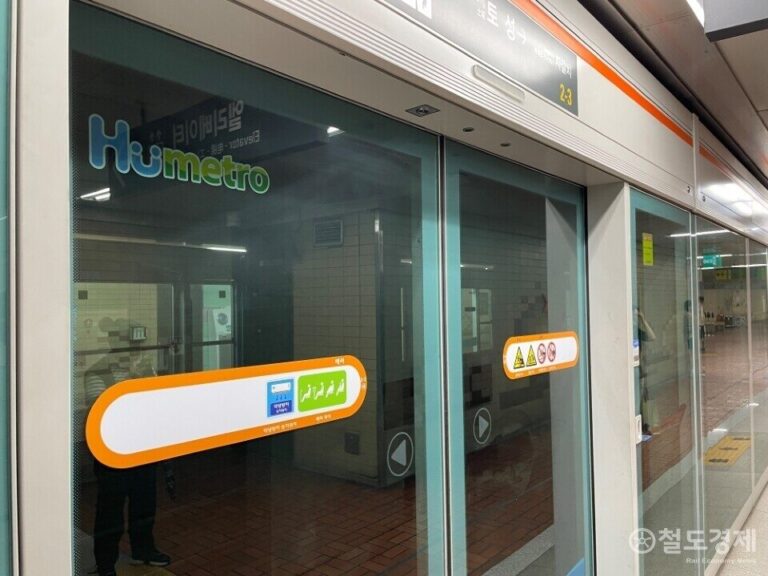
Busan’s metro has four lines covering the city’s most important neighborhoods — Seomyeon, Haeundae, Nampo-dong, Gwangalli, and Centum City. It’s air-conditioned, clean, and announcements play in English. For most foreigners, this will be the default choice for getting around.
Fares start at 1,500 KRW with a T-money card (as of early 2026, prices may vary). The system runs from approximately 05:30 to midnight. One important catch: the last train runs earlier than midnight at some stations — always check the specific departure time for your station, or you’ll find yourself stranded.
The subway doesn’t reach everywhere. Songdo Beach, hillside villages like Gamcheon, and outer areas like Gijang and Dadaepo require a bus or taxi. For those gaps, read on.
City Bus: Cheap, Comprehensive, and Tricky
Busan’s bus network covers far more of the city than the subway. If you’re willing to invest a little effort, it’ll take you almost anywhere for under 2,000 KRW. The challenge is that bus stops can be confusing, route numbers aren’t always intuitive, and English signage is inconsistent at smaller stops.
My strong recommendation: use Naver Map (available in English) to plan bus routes. It’s far more accurate than Google Maps for Busan’s local buses and will tell you the exact bus number, boarding stop, and how many stops to ride.
There are several bus types to know: regular buses (일반, ilban) are the everyday option; express buses (급행, geup-haeng) cost slightly more but skip many stops; and village buses (마을버스, ma-eul beoseu) serve narrow alleys and hillside areas where larger buses can’t go. Most of the time you’ll be on regular buses.
Night Bus
When the subway closes around midnight, night buses (심야버스) cover key corridors from around midnight to 4 AM. Routes are limited but strategic — major connections like Seomyeon to Haeundae, or Nampo to university areas. Fares are slightly higher than daytime buses, and you can pay with T-money or cash.
Check our Busan night bus guide for exact routes, schedule, and which stops to use.
Taxi: Always Use Kakao T
Regular metered taxis in Busan are generally reliable and honest. The base fare starts at 4,800 KRW as of early 2026. However, hailing one on the street is hit-or-miss — some drivers refuse short trips or inconvenient destinations, and without Korean you may struggle to communicate.
My pick for taxis: use Kakao T every single time. It’s Korea’s dominant ride-hailing app, and it removes every friction point. You enter your destination in the app (English addresses work), the driver accepts before you get in, and the fare is identical to a street taxi. No language barrier, no destination refusals.
Download the app, verify your phone number, and add an international credit card — the setup takes about five minutes. Premium tiers (Kakao Black, Kakao Deluxe) are available if you want a larger vehicle or more comfort for the same booking process.
For setup instructions and fare expectations, see our Kakao T taxi guide for Busan.
Airport Limousine Bus: The Smart Way Into the City
Gimhae International Airport sits about 30–40 minutes from downtown Busan. You have three realistic options from the arrivals hall: the subway (Line 2, requires one transfer), a limousine bus, or a taxi. For most visitors arriving with luggage, the limousine bus is the easiest call.
These are comfortable express coaches running direct to major hotel districts: Haeundae, Seomyeon, Nampo-dong, and others. Fares range from around 7,000 to 17,000 KRW depending on your destination (as of early 2026, prices may vary). Buses operate roughly 5 AM to 10 PM — if your flight lands after that, you’ll need a taxi or the subway.
Tickets are sold at the counter just outside arrivals on the ground floor. Some routes accept T-money directly. The stops are well-signed in English, and the coaches are spacious enough for full-size luggage.
Get full route maps and departure times in our Busan airport limousine bus guide.
Sea Bus (Ferry): Busan’s Most Underrated Option
Most visitors have no idea Busan has a coastal water transit network. The sea bus (해상버스) runs along the shoreline connecting Haeundae, Gwangalli, Songdo, and the Busan Port area. It is, honestly, one of my favorite ways to experience this city.
Fares are low — typically 2,000–3,000 KRW per ride — payable with T-money or cash. Routes run roughly 7 AM to 9 PM, though schedules vary by season and can be suspended during rough weather or strong winds. Always check before planning around it.
For sightseeing, the sea bus is fantastic value. The view looking back at Gwangandaegyo Bridge or the Haeundae high-rises from the water is genuinely spectacular — something you won’t get from any other transit mode. For pure commuting efficiency, the subway is faster. But if you’re here to experience Busan and not just get across it, take the sea bus at least once.
Full boarding locations and route details are in our Busan sea bus and ferry guide.
City Tour Bus: Worth It Exactly Once
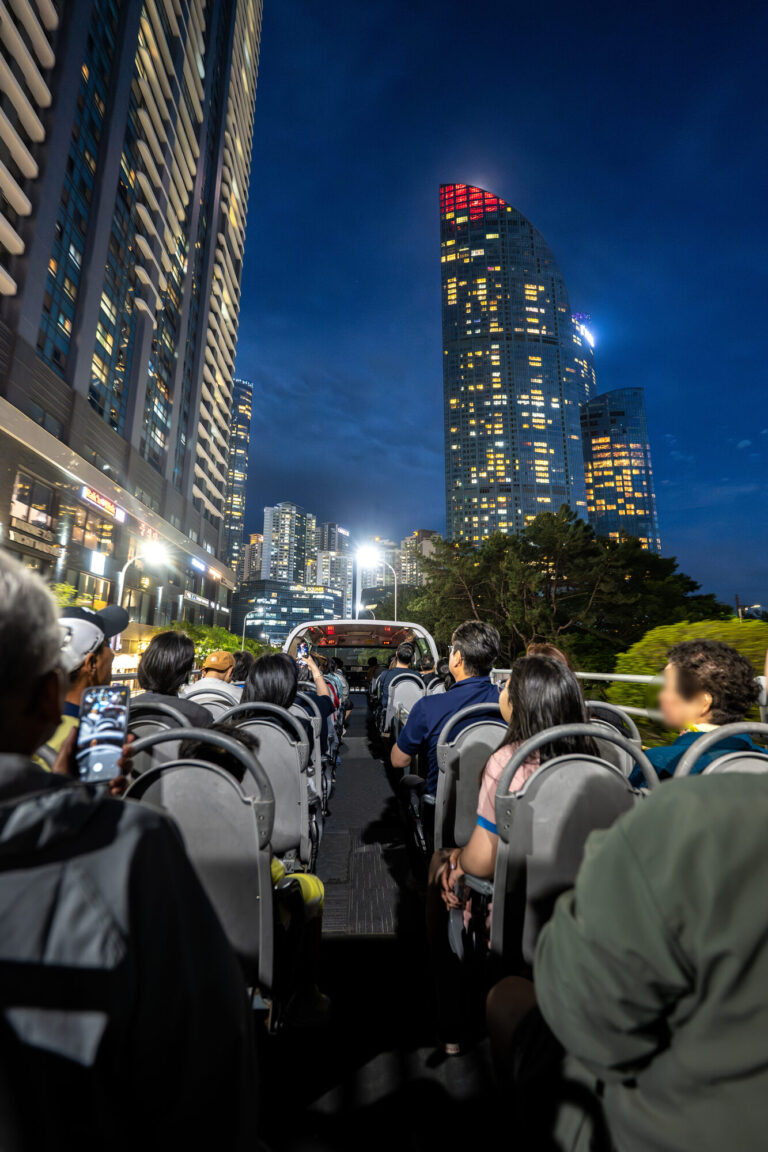
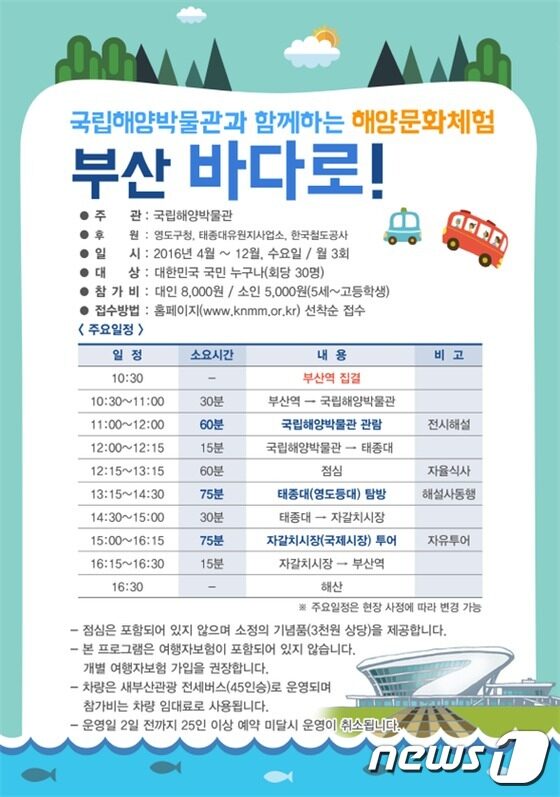
Busan’s official hop-on hop-off city tour bus loops through the major tourist highlights — Jagalchi Market, Gamcheon Culture Village, Haeundae Beach, Taejongdae Park, and more. A day pass runs around 15,000 KRW and includes audio guides in multiple languages including English.
For a first visit where you want to hit many highlights without planning bus routes yourself, this is genuinely good value. The driver won’t judge you for getting on and off at every stop, and the commentary gives useful context you won’t get from Google.
That said, I think the city tour bus is overrated for anyone staying more than two or three days. The schedule is fixed, wait times between buses can stretch to an hour, and you move at the bus’s pace rather than your own. Once you’ve figured out the subway and Kakao T, you’ll have far more flexibility and speed for about the same price.
Full schedule and boarding info in our Busan city tour bus guide.
Decision Matrix: Which Transport for Which Scenario
Stop second-guessing. Here’s what to take in the situations that come up most often.
| Scenario | Best Option | Backup | Notes |
|---|---|---|---|
| Airport → Downtown hotel (daytime) | Limousine Bus | Subway Line 2 | Bus is easier with luggage; subway needs a transfer at Sasang |
| Airport → Hotel (after 10 PM) | Kakao T Taxi | Subway (if still running) | Budget 30,000–50,000 KRW depending on destination |
| Haeundae ↔ Seomyeon | Subway Line 2 | Bus | Direct, no transfer — one of the easiest routes in the city |
| Late-night return (after midnight) | Kakao T Taxi | Night Bus | Night buses are cheaper; taxis are faster and completely hassle-free |
| Gamcheon Culture Village day trip | Bus + Walk | Kakao T to entrance | No subway access; bus 1-1 or 2 from Toseong station |
| Coastal sightseeing (Haeundae ↔ Gwangalli) | Sea Bus | Subway | Sea bus is scenic; subway is 10× faster |
| First day, want many sights, no planning | City Tour Bus | Kakao T | Good for orientation; poor for flexibility or timing control |
| Hillside neighborhoods or narrow alleys | Village Bus | Kakao T / Walk | Some areas are only reachable on foot or by small local bus |
Common Mistakes Foreigners Make
I’ve made most of these personally. Here’s what to watch out for so you don’t repeat them.
Getting Off at the Wrong Subway Exit
Major Busan stations can have 10 or more exits, often spread across a very wide area. Getting out at the wrong one and walking back above ground to the right side of the street can waste 10–15 minutes. Always check the exit number in Naver Map before you tap through the gate — re-entering costs you another fare.
Confusing Bus Route Variants
Bus 51 and Bus 51-1 are not the same route. The “-1” variant often branches off in a completely different direction midway through. Always confirm the exact route number, including any suffix, in your map app before boarding.
Trusting the Destination Board Alone
Bus LED boards show major stops, but they may not list your specific stop. If you’re uncertain, ask the driver: “이 버스 [목적지] 가요?” (i beoseu [destination] ga-yo?) — “Does this bus go to [destination]?” A simple point at your phone map also works.
Hailing Street Taxis Without Kakao T
Some street taxis ignore passengers or drive off if they don’t want the destination — especially for short trips or areas with heavy traffic. Don’t stand in the rain waving your arm. Use Kakao T. The driver commits before pickup, so refusals simply don’t happen.
Assuming the Subway Runs Until Midnight Everywhere
Last train times vary by line and station. Some outer stations stop service as early as 11:20 PM. Check the specific departure time for your return station in the Busan Metro app — not just a general assumption about when the system closes.
Skipping the Transfer Discount
When you use T-money and transfer between subway and bus (or bus to bus) within 30 minutes, you receive a discounted fare. Always tap T-money on exit, not just entry — that’s what registers the transfer window. Paying cash means you lose this discount every single time.
Essential Korean Phrases for Transit
You don’t need fluency to navigate Busan. These seven phrases will handle the situations that come up most often.
| Situation | Korean | Pronunciation | Meaning |
|---|---|---|---|
| Charging T-money | 충전해 주세요 | Chung-jeon hae ju-se-yo | “Please charge (this card)” |
| Does this bus go here? | 이 버스 [목적지] 가요? | I beoseu [destination] ga-yo? | “Does this bus go to [destination]?” |
| Let me off here, please | 여기서 내려 주세요 | Yeo-gi-seo nae-ryeo ju-se-yo | “Please let me off here” |
| Where is the subway? | 지하철역 어디예요? | Ji-ha-cheol-yeok eo-di-ye-yo? | “Where is the subway station?” |
| Please go to [destination] (taxi) | [목적지]로 가 주세요 | [Destination]-ro ga ju-se-yo | “Please take me to [destination]” |
| How much is it? | 얼마예요? | Eol-ma-ye-yo? | “How much?” |
| I don’t understand | 모르겠어요 | Mo-reu-ge-sseo-yo | “I don’t understand” |
Most transit staff near tourist areas are used to foreign visitors and are patient even with no shared language. A phone screen showing your destination on a map, paired with one of the phrases above, solves almost every situation.
The Short Version: What You Actually Need
If I had to distill this entire guide: buy a T-money card at the airport, download Kakao T before you land, and save Naver Map to your home screen. Those three things solve 95% of every transit situation you’ll face in Busan.
The subway handles most tourist-zone movement with zero friction. Kakao T fills every gap the subway leaves. The airport limousine gets you in from Gimhae without stress. Everything else — night buses, sea bus, city tour — is a welcome layer once you have the fundamentals down.
Busan rewards visitors who learn to move around it confidently. This complete Busan transit guide foreigners can rely on is here whenever you need to revisit the decision matrix or double-check a route.
Last verified: April 2026 · Sources: Visit Busan, Naver Map
Prices, hours, and details change frequently. Please verify on the official website before visiting.