A Practical Guide to Busan Milmyeon: Cold Noodles Worth Trying
If you’ve spent any time in Busan, you’ve probably walked past a restaurant with 밀면 on the sign and wondered what you’re looking at. I’ve been eating milmyeon around the city for a few years now, and I’ll say this plainly: it’s one of the most underrated dishes in Korea — and one of the most distinctly Busan things you can eat. This isn’t a dish that made it onto nationwide menus. It belongs here.
This guide compares three of the best spots to try Busan milmyeon cold noodles, breaks down what makes this dish different from naengmyeon, and helps you figure out which bowl — and which restaurant — is right for you.
What Is Milmyeon? The Busan-Born Cold Noodle
Milmyeon (밀면) is a cold noodle dish unique to Busan. The name is simple: 밀 (mil) means wheat, and 면 (myeon) means noodles. The dish was created in the 1950s when North Korean refugees arrived in Busan during the Korean War. They wanted to recreate the cold noodles from back home — but buckwheat, the traditional noodle base, was hard to source. Wheat flour was available, so they adapted the recipe, and milmyeon was the result.
What makes milmyeon worth your attention is that it genuinely hasn’t spread far beyond the city. According to Visit Busan, milmyeon is one of Busan’s defining representative foods alongside dwaeji gukbap (pork soup rice). This is a dish that emerged from a specific moment in a specific place — eating it here feels like eating something that actually belongs here, because it does.
Milmyeon vs. Naengmyeon: What’s the Difference?
The question I get most from friends visiting from Seoul: “Is this just naengmyeon?” The short answer is no. Both are cold noodle dishes with some visual overlap, but the noodle base, texture, broth style, and regional origin are all different. Here’s the full comparison.
| Category | Milmyeon (밀면) | Naengmyeon (냉면) |
|---|---|---|
| Noodle base | Wheat flour | Buckwheat (+ starch) |
| Texture | Soft, springy, elastic | Firmer, denser, can be tough |
| Broth | Beef-based, mildly sweet | Beef or dongchimi (radish), more tangy |
| Temperature | Cold (sometimes semi-frozen broth) | Cold (often served with ice chunks) |
| Origin | Busan (1950s wartime adaptation) | Pyongyang / Hamhung (North Korea) |
| Where to find it | Primarily Busan | Nationwide |
The texture difference is the most immediately noticeable thing. Milmyeon noodles are springy and elastic — a pleasant chew without any toughness. Naengmyeon noodles are denser and can be quite firm, which is why naengmyeon restaurants keep scissors on the table to cut them. If naengmyeon has ever felt like a struggle, milmyeon will feel considerably more approachable.
Mul-Milmyeon vs. Bibim-Milmyeon: Which Style Should You Order?
Before you sit down, you need to make one decision: mul (물) or bibim (비빔). Every milmyeon restaurant offers both, and the choice significantly changes the experience.
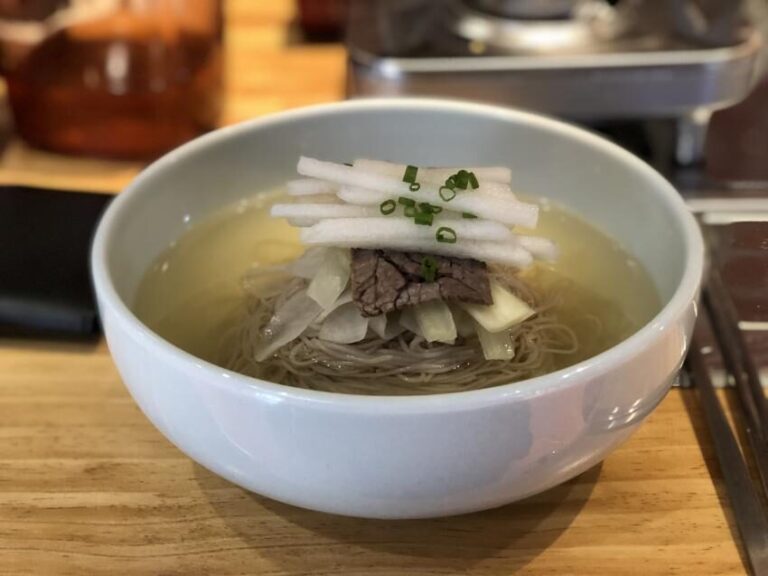
Mul-milmyeon (물밀면) is the broth version. Cold noodles arrive in a chilled beef-based broth — clean, slightly sweet, and mildly tangy. Toppings are typically sliced cucumber, a hard-boiled egg, and thin slices of beef or pork. This is the beginner-friendly option: light, refreshing, no heat. If you’re trying milmyeon for the first time, start here.
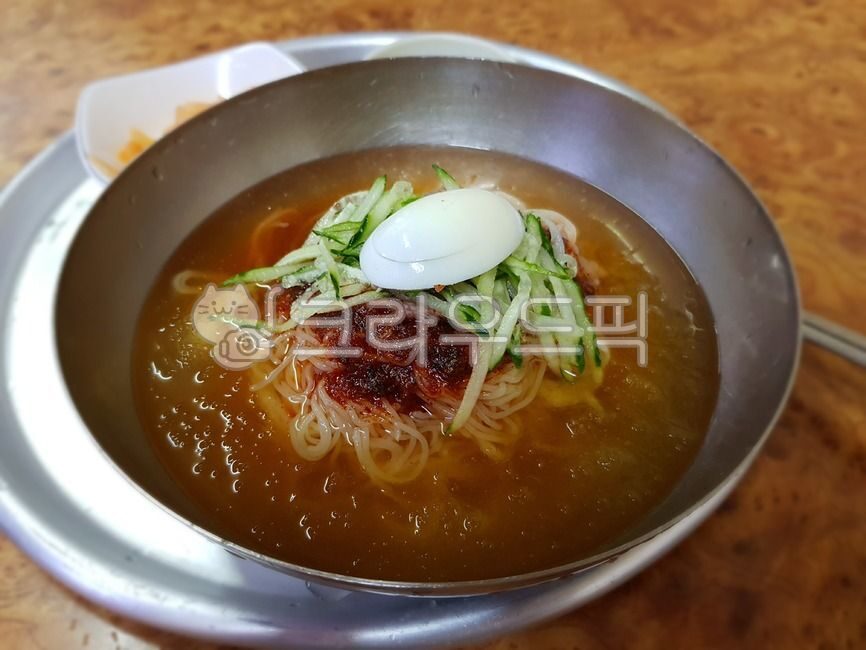
Bibim-milmyeon (비빔밀면) is served dry, tossed in a spicy gochujang-based red pepper sauce. The flavor is bold, tangy, and hot — noticeably spicier than the broth version. If you regularly eat tteokbokki or other spicy Korean food without any trouble, you’ll probably prefer this. If you’re heat-sensitive, stick with mul.
Some restaurants offer a 반반 (ban-ban) option — half broth, half spicy — which is a practical way to try both styles in one bowl. Worth asking about if you’re undecided.
Three Places to Try Busan Milmyeon Cold Noodles
Gaya Milmyeon — The Reliable Chain
Gaya Milmyeon (가야밀면) is the most recognized milmyeon brand in Busan. The original branch opened in the Gaya neighborhood in the 1950s, and it has since expanded to multiple locations across the city. For many locals, Gaya is effectively synonymous with milmyeon — it’s the name that comes up first when you ask someone where to go.
I’ll be direct: Gaya is a little overrated if you’re treating it as a destination in its own right. The broth is consistent, the noodles are well-made, and portions are generous — but the atmosphere feels more canteen than character. It’s the kind of place you go because it’s convenient and predictable, not because it’s memorable. Temper expectations accordingly and you’ll leave satisfied.
As of early 2026, prices run around ₩8,000–₩9,000 per bowl. Several branches have picture menus, which helps considerably when you don’t read Korean. If you’re in the Seomyeon, Gaya, or Hadan area, this is the most accessible milmyeon option available to you.
Choryang Ibalso — Old-School Atmosphere Near Busan Station
Choryang Ibalso (초량이발소) is my top pick on this list. The name translates to “Choryang Barbershop” — because the space actually was a working barbershop before it became a restaurant. The retro interior is largely intact: vintage mirrors, wooden fittings, and old signage that gives the place a genuine 1960s–70s feel. This isn’t manufactured nostalgia; the character is earned.
The milmyeon itself is excellent. The noodles hit the right texture — springy without being rubbery — and the broth is well-balanced with a depth you won’t find at a chain. The Choryang neighborhood near Busan Station is historically rich, with Japanese colonial-era buildings and the landmark Baekje Hospital nearby. This is a full afternoon’s destination, not just a quick meal stop.
The menu is in Korean only, so the ordering phrases below will be useful. Staff are patient with foreign visitors. As of early 2026, expect to pay around ₩9,000–₩11,000 per bowl. From Busan Station it’s about a 10–15 minute walk, or a short taxi ride.
Gwangalli Mul Naengmyeon — The Waterside Option
Gwangalli Mul Naengmyeon (광안리물냉면) earns its place on this list as much for location as for the food. The restaurant sits near Gwangalli Beach, and if you’re already spending a day by the water, adding a bowl of cold noodles to the afternoon makes natural sense. The Gwangan Bridge views from this area are some of the best in Busan.
The food is solid — clean broth, good noodle texture, a well-portioned bowl. One practical note: despite the word “naengmyeon” in the name, they serve milmyeon as well. Ask specifically for milmyeon when ordering if that’s what you want. The Gwangalli area is generally one of the more foreigner-friendly parts of Busan, and staff here are accustomed to non-Korean speakers.
Don’t make a special trip purely for the food — but if you’re already at the beach, it’s a very solid stop. Prices may vary seasonally; as of early 2026, expect around ₩9,000–₩12,000 per bowl.
At a Glance: Restaurant Comparison
Use this table to match the restaurant to your situation and priorities.
| Restaurant | Style | Price (est.) | Location | Spice Level | Foreigner Friendliness |
|---|---|---|---|---|---|
| Gaya Milmyeon | Mul & Bibim | ₩8,000–₩9,000 | Multiple city locations | Mild to Medium | ★★★★☆ — picture menu at some branches |
| Choryang Ibalso | Mul & Bibim | ₩9,000–₩11,000 | Near Busan Station | Mild to Hot | ★★★☆☆ — Korean menu only, patient staff |
| Gwangalli Mul Naengmyeon | Mul (primarily) | ₩9,000–₩12,000 | Near Gwangalli Beach | Mild | ★★★★☆ — tourist-friendly area |
My recommendation for most first-timers: Start at Gaya Milmyeon if you want something accessible and low-stakes. Go to Choryang Ibalso when you want the full experience. Gwangalli Mul Naengmyeon is the right call if you’re already at the beach.
How to Order in Korean
Most milmyeon restaurants have minimal English on the menu, but ordering is straightforward with a few key phrases. Pointing at a menu item works too — staff at all three restaurants on this list are used to it.
- 밀면 하나요 (milmyeon hana-yo) — “One milmyeon, please.” Basic single-bowl order.
- 물밀면 주세요 (mul milmyeon juseyo) — “Please give me mul-milmyeon.” Specifies the broth version.
- 비빔밀면 주세요 (bibim milmyeon juseyo) — “Please give me bibim-milmyeon.” Specifies the spicy mixed version.
- 덜 맵게 해주세요 (deol maepge haejuseyo) — “Please make it less spicy.” Use with bibim if you’re heat-sensitive.
- 두 개 주세요 (du gae juseyo) — “Two please.” For ordering two bowls at once.
Cash and card are both accepted at most established milmyeon restaurants. Tipping is not practiced in Korea — don’t leave one. You may also receive a small cup of warm meat broth (육수, yuk-su) before your noodles arrive. Drink it — it’s part of the experience and warms up the palate before the cold bowl lands.
Summer vs. Winter: When to Eat Milmyeon
Milmyeon is a year-round dish in Busan, but the season changes how and why you eat it.
Summer (June–September) is peak milmyeon season. Busan summers are hot and humid, and a bowl of ice-cold noodles in chilled broth is one of the most genuinely refreshing things you can eat in this city. Lines at popular spots like Gaya and Choryang Ibalso run long in July and August — arrive before noon or after 2:00pm to avoid the lunch rush. The heat outside makes the cold bowl feel like the right decision every time.
Winter is when milmyeon feels counterintuitive to most foreigners, but plenty of Busan locals eat it year-round without any fuss. The reasoning is that your body’s internal warmth makes the cold food feel less extreme, and the contrast is considered invigorating. Bibim-milmyeon makes more sense in colder months — the spice generates enough internal heat to offset the cold noodles. If you’re particularly cold-sensitive, mul-milmyeon in January is a tough ask. Go with bibim, or save the broth version for warmer days.
All three restaurants on this list are open year-round, though hours may shift by season. Check Naver Map before visiting to confirm current opening times and any temporary closures.
Last verified: April 2026 · Sources: Visit Busan, Naver Map
Prices, hours, and details change frequently. Please verify on the official website before visiting.