Haeundae Makchang Alley: Grilled Offal Guide
If you’ve walked the side streets near Haeundae Station at night and spotted clusters of small restaurants glowing red, smoke rising from charcoal grills, locals crouched over plates of something unidentifiable — you’ve already passed the makchang alley without knowing it. A good Haeundae makchang restaurant is one of the most genuinely local eating experiences in this neighborhood. Most foreigners never step inside. I live in Haeundae, I eat here regularly, and I want to change that. If you want to know how to find the best Haeundae makchang spots, how to order, and what to actually expect — read on.
What Is Makchang (막창)?
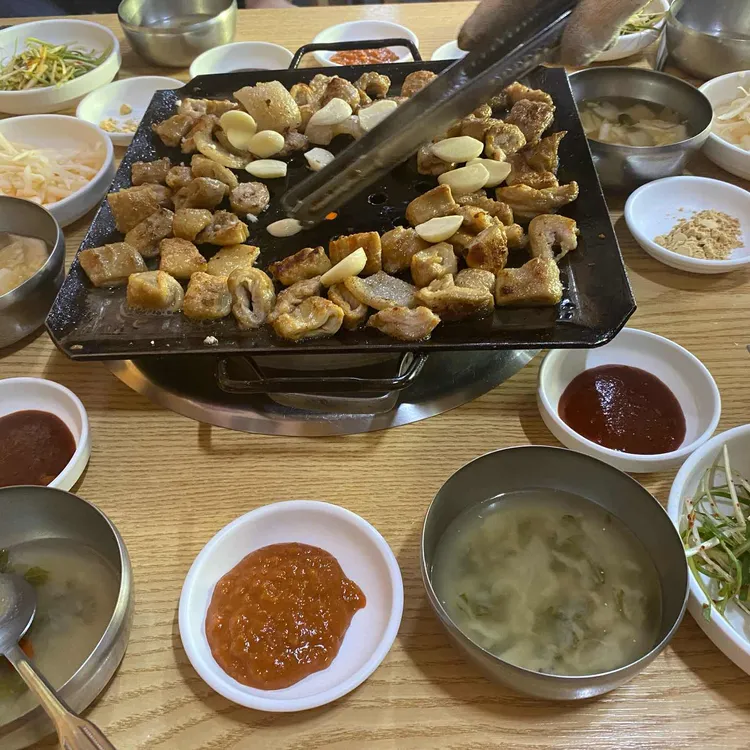
Makchang (막창, pronounced “mak-chang”) literally means “large intestine” — specifically pork large intestine, grilled over charcoal until the outside crisps and the inside stays chewy and rich. Distinct flavor. Fatty, slightly gamey, deeply savory. Not for the faint-hearted, but honestly not as intense as you might expect either.
This is a Busan dish. You can find versions of it in Seoul, but locals here will tell you it originated in the south — and that Busan does it right. The texture is what catches people off guard. It’s not crispy like bacon. Not soft like pork belly. Somewhere in between, with a chew that builds as you eat.
The dipping sauce is called gireumjang (기름장) — sesame oil mixed with salt and sometimes pepper. That’s how you eat makchang in Busan. No lettuce wrap, no paste. Cut a piece, dip it in the oil-salt mixture, eat it straight.
Where to Find Haeundae Makchang Restaurants
Here’s what nobody tells you: the Haeundae makchang alley is not near the beach. Not even close. You won’t find it walking along the Haeundae beachfront — it’s behind it, in the older residential streets around Haeundae Station (해운대역), exits 3 and 5, toward the local market area.
This is the part of Haeundae most tourists skip entirely. Narrower streets, signs only in Korean, restaurants that look like they haven’t been renovated since the 90s. Some of them genuinely haven’t. That’s a good sign.
The cluster of makchang restaurants sits roughly between the station and the traditional market area (해운대전통시장). You’ll know you’re in the right place when you smell charcoal smoke and see red paper lanterns or hand-painted 막창 signs. Most places open around 5pm and run until late. I’d go after 7pm — that’s when the grills are going full swing and the place has real atmosphere.
Use Naver Map and search “해운대 막창” to see all the spots in the area. It’ll show you which ones are currently open and have reviews.
How to Order at a Haeundae Makchang Restaurant
Walk in and you’ll probably be seated immediately. These places are rarely full before 7pm, busy after 8pm. Here’s the step-by-step:
- Order by 인분 (inbun) — this means servings. One serving (1인분, il-inbun) is typically 150–200g and runs around 12,000–14,000 KRW as of early 2026. Most restaurants require a minimum of 2인분.
- Say the number of servings — hold up fingers or say “ee-inbun” (2인분) for two. Most staff will catch on quickly.
- Makchang only, or combo? — Some places offer a combo (모둠, modeum) with makchang plus other offal like gopchang (곱창, small intestine) or daechang (대창, beef large intestine). If you want to try different things, order 모둠. If you want to focus on makchang, just say 막창.
- Order drinks — Soju (소주) is the standard pairing, around 4,000–5,000 KRW per bottle. Beer (맥주) works too. Some people mix them (소맥, somaek).
The staff will grill the meat for you at a small table grill — you don’t cook it yourself at most traditional spots here. When a piece is ready, they’ll cut it with scissors (가위, gawi) and slide it to the edge of the grill to keep warm.
What to Expect When the Grill Arrives
The banchan (반찬) at makchang restaurants is minimal. You’ll usually get:
- Gireumjang dipping sauce (기름장) — sesame oil with salt
- Doenjang jjigae (된장찌개) — a soybean paste stew, sometimes included in the price
- Kimchi and maybe one or two other small sides
- Sliced raw garlic and green chili to grill alongside the meat
Don’t expect a long side dish spread like you’d get at samgyeopsal (삼겹살) restaurants. The focus here is the makchang itself. Raw garlic and chili go directly on the grill — cook them until slightly charred, eat alongside the meat.
When makchang is properly cooked, the skin crisps and the ends char slightly. Eat it within a minute of coming off the grill. It tightens and loses texture fast as it cools.
My Go-To Spot: 원조할매막창
There are several places worth trying, but 원조할매막창 (Wonjohalmae Makchang) — “Original Grandma’s Makchang,” roughly — is the kind of place that’s been feeding locals for decades. Old-school, no-frills. You can tell from the moment you walk in.
The interior is small, seating maybe 30 people at low tables. The grill is built into each table. Staff move quickly and efficiently — you won’t be left waiting. On a recent visit I tried ordering in English and got a friendly smile and a menu pointed at me. Pointing at 막창 and holding up two fingers worked fine.
The makchang here is cleaned well, which matters more than people realize. Poor cleaning is what makes offal taste aggressively gamey. Here it’s mild enough that a friend who normally avoids organ meat finished two servings and ordered more. The gireumjang is simple but the sesame oil quality is noticeably good — it makes a difference.
- Address: 부산광역시 해운대구 해운대동 (near Haeundae traditional market — confirm exact location on Naver Map)
- Price: Makchang 1인분 around 13,000 KRW, Modeum combo from 15,000 KRW — as of early 2026, worth confirming when you visit
- Hours: Approximately 17:00–01:00, closed one day per week — check Naver Map before heading out, as these hours can shift
- Cash recommended — many small makchang restaurants in this area are cash-preferred. See how paying works in Korea if you’re unsure about cash vs card.
Practical Tips Before You Go
A few things worth knowing before your first visit:
- Smell stays in your clothes. Charcoal smoke and pork fat is a combination that lingers. Don’t wear anything you care about.
- Go with Koreans if you can. Not required, but if you have a Korean friend or coworker who’s done this before, the experience is easier to navigate and more fun. Ask them to order the first round.
- Don’t rush. Makchang is a slow meal. You eat, you drink, you talk. The grill keeps things warm. Most Koreans spend 90 minutes to two hours at these restaurants.
- Lunch is not a thing here. These restaurants are evening-only. Don’t show up at noon.
- The bathrooms are basic. Shared facilities between restaurants, minimal upkeep — that’s just the reality of alley dining like this. Not a dealbreaker, but plan accordingly.
- The area is easy to reach. Haeundae Station is on Busan Metro Line 2. If you need help navigating the subway system, check the Busan subway guide.
Makchang is not the most photogenic food. And it’s not the meal you come to Busan for if you’re chasing trends. It’s the meal you eat on a Tuesday night with a bottle of soju when you want to understand what this city actually eats. After a few visits to the Haeundae makchang alley, it starts to feel like a regular part of the week — which for me, it is.
Last verified: April 2026 · Sources: Visit Busan, Naver Map – 해운대 막창
Prices, hours, and details change frequently. Please verify on the official website before visiting.