5 Things to Know Before Eating at Millak Hoe Center
Walking into a multi-floor seafood complex where vendors shout prices in Korean, tanks bubble with live fish you can’t identify, and no single menu exists — that’s the Millak hoe center Busan experience. Not a restaurant in any conventional sense. It’s a working market with dining floors bolted on top, and it runs by rules most first-timers have never encountered.
The good news: once you understand how it works, it’s genuinely one of the more interesting eating experiences in the city. The tricky part is that the system isn’t posted anywhere in English — and guessing wrong can mean paying significantly more than you should. Busan has seen a steady influx of international visitors since the K-content wave picked up, and the Gwangalli area in particular has gotten noticeably busier. That makes it more important than ever to know what you’re walking into.
Five things worth knowing before you go.
1. The Market Floor Comes Before the Dining Floor
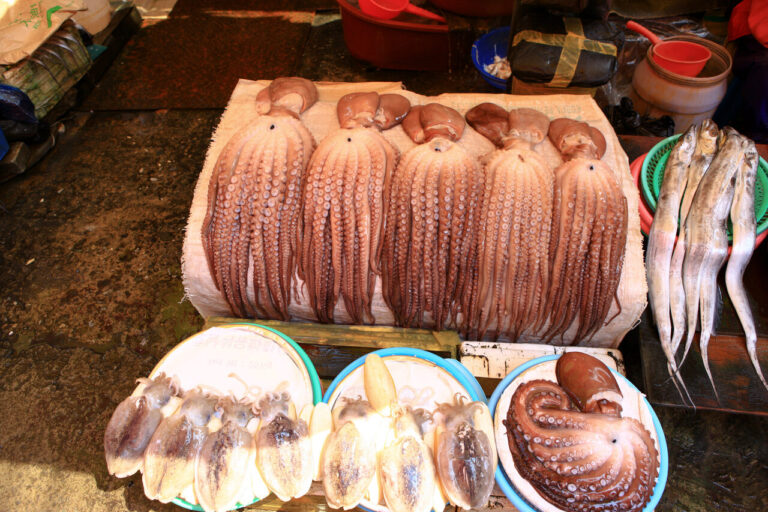
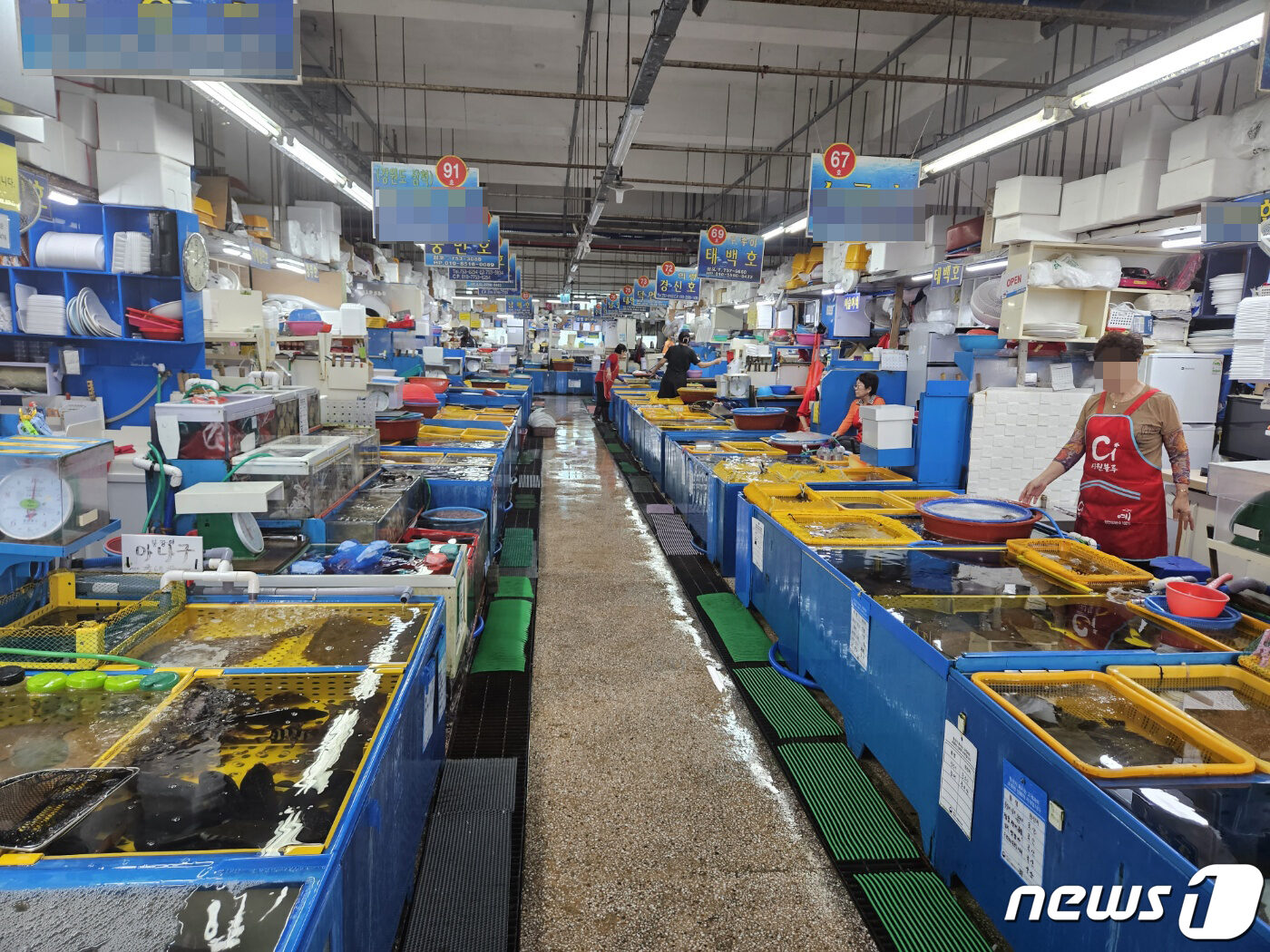
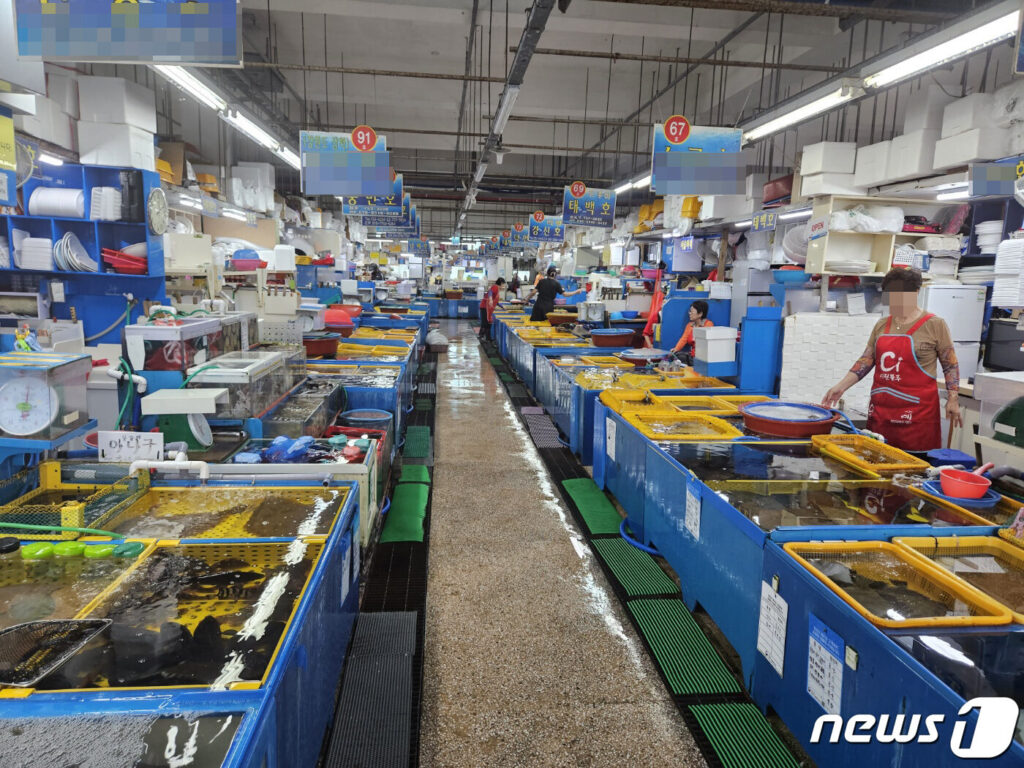
Millak Raw Fish Center (밀락회센터) is a multi-story building near Millak Waterside Park (밀락수변공원), a short walk from Gwangalli Beach (광안리해수욕장). The lower levels are the market: rows of vendor stalls, each with tanks full of live flounder, rockfish, abalone, and other sea creatures. The upper floors are where you sit and eat.
The process works like this:
- Browse the market level and look at the tanks.
- Choose a vendor and point at the fish you want.
- The vendor weighs it and quotes you a total price.
- You confirm — then they prepare the fish.
- You follow their staff to the dining area upstairs connected to that specific stall.
Each market vendor has a corresponding dining section upstairs. You don’t eat in some shared restaurant — you eat with the vendor you bought from. So pricing, included side dishes, even the overall vibe can vary significantly from stall to stall.
If you walk directly to the upper floors without selecting fish first, staff will redirect you downstairs. That’s the single most common first-timer mistake. Don’t be that person.
2. How Per-Gram Pricing Works
Fish here is priced by weight — typically per 100 grams (백그램 / baek geurem). No fixed set meal price. A vendor will weigh your selected fish in front of you and quote a total based on the live weight.
The most important distinction you’ll encounter is 자연산 (jayeonsan) versus 양식 (yangsik).
- 자연산 (jayeonsan) — wild-caught. Significantly more expensive.
- 양식 (yangsik) — farmed. More affordable and still very fresh.
Honestly, most first-time visitors ordering flounder or rockfish don’t need wild-caught to have a great meal. The taste difference is real but subtle; the price gap is not subtle at all.
Approximate Price Ranges (early 2025 — verify before visiting)
| Fish (Korean / Romanized / English) | Farmed (양식) per 100g | Wild-Caught (자연산) per 100g |
|---|---|---|
| 광어 / Gwangeo / Flounder | typically ₩4,000–6,000 | typically ₩10,000–20,000+ |
| 우럭 / Ureok / Korean Rockfish | typically ₩4,000–6,000 | typically ₩12,000–20,000+ |
| 방어 / Bangeo / Yellowtail | typically ₩5,000–8,000 | typically ₩15,000–30,000+ |
| 전복 / Jeonbok / Abalone | priced per piece — ask the vendor directly | |
A typical order for two people involves a fish weighing around 1–1.5kg. At farmed flounder prices, that puts you somewhere in the ₩40,000–90,000 range before extras — though prices shift, so treat those figures as a rough baseline for 2025. Wild-caught can double or triple that figure easily.
Before committing, ask: “이게 자연산이에요, 양식이에요?” (Igege jayeonsan-i-eyo, yangsik-i-eyo?) — “Is this wild-caught or farmed?” Vendors will answer directly.
3. What’s Included — and What Costs Extra
The fish price is not your final bill. Most vendors charge a separate 상차림비 (sangcharimbi) — a per-person table service fee covering the side dishes and use of the dining area upstairs. As of early 2025, this appears to run roughly ₩5,000 to ₩10,000 per person, though it varies by vendor and isn’t always posted anywhere visible. Some stalls charge toward the higher end with minimal justification. It’s standard practice — but worth knowing in advance so it doesn’t catch you off guard.
The sangcharimbi typically includes:
- Lettuce and perilla leaves (상추 / 깻잎) for wrapping the fish
- Ssamjang (쌈장) — fermented soybean and chili paste
- Sesame oil with salt (참기름 소금) for dipping
- Gochujang (고추장) sauce
- Small banchan: kimchi, pickled vegetables, and similar
What usually costs extra:
- Rice (공기밥 / gonggibap) — typically ₩1,000–2,000 per bowl
- Maeuntang (매운탕) — spicy fish soup made from the bones and head. Some vendors include it; others charge separately, often ₩5,000–10,000. Worth asking about. Order it.
- Drinks: soju (소주), beer (맥주), bottled water
Before sitting down, ask: “상차림비가 얼마예요?” (Sangcharimbi-ga eolmayeyo?) — “How much is the table service fee?” It’s an expected question. Not rude at all.
4. How to Avoid Overpaying as a Foreigner
It would be misleading to say tourist pricing never happens here. A busy market with language barriers and flexible pricing creates some room for inflated quotes. That said, most vendors operate with regular local customers — and on Naver Map, Koreans leave detailed, unsparing reviews. Flagrant overcharging doesn’t go unnoticed for long.
The most effective protection is simple: confirm the total before they prepare the fish. Once you verbally agree, that’s the commitment. Point at the fish, gesture upstairs, and ask: “전부 얼마예요?” (Jeonbu eolmayeyo?) — “How much is everything total?”
Also, browse two or three stalls before choosing. Pricing for the same species can vary between vendors — sometimes by quite a bit. A five-minute comparison is worth it.
Naver Map is genuinely useful here. Many locals leave reviews specifically mentioning whether a stall is foreigner-friendly or whether the pricing felt fair. If you haven’t set up Naver Map in English yet, search 밀락회센터 and check the recent reviews before committing to a vendor.
One thing to prepare for: the atmosphere on the market floor is active. Vendors will call out and gesture toward their tanks as you walk past. Normal, not aggressive — but it can make comparison-shopping feel socially awkward. A polite “잠깐만요” (jamkkanman-yo — “just a moment”) lets you move on without offense.
5. Getting There and When to Visit
For the current address and walking directions, search 밀락회센터 on Naver Map. The building is near Millak Waterside Park in Suyeong-gu, close to the Gwangalli Beach area.
By subway: Take Line 2 to Gwangan Station (광안역). The walk from the station runs roughly 10–15 minutes depending on your exit — Naver Map’s walking directions will route you accurately from the specific exit. Alternatively, a taxi from Gwangan station typically runs under ₩5,000. If you’re new to Busan’s transit system, the T-money card and subway guide covers fare payments, transfers, and how to load your card.
Parking in the Gwangalli area is limited and expensive on weekends. Public transit or a taxi is the practical choice for most visitors.
Best times to visit:
- Weekday afternoons (Tue–Thu, 2–5pm) — quietest period; vendors have time to interact
- Weekend evenings (Fri–Sat, 6pm onward) — busiest; expect waits for dining tables upstairs
- Summer (July–August) — beach crowds spill into the surrounding area; arrive before noon or after 8pm
- Winter (December–February) — generally quieter, and cold-water fish like flounder are reportedly at their best this time of year
Foreigner-Friendliness at a Glance
| Factor | Status | Notes |
|---|---|---|
| English menu | No | Use Papago to photograph and translate price boards at each stall |
| English-speaking staff | Limited | Basic communication via numbers and gestures is workable |
| Card payment accepted | Varies by vendor | Bring cash (won) — some stalls are cash-only. See the Korea payment guide. |
| Vegetarian / vegan options | No | This is a raw seafood market; plant-based options are not available |
| Halal options | No | No halal certification on the premises |
| Wheelchair accessibility | Partial | Ground floor market may be navigable; upper dining floors often require stairs |
| Nearest subway | Gwangan Station (Line 2) | Approximately 10–15 min walk |
| Child-friendly | Generally yes | No alcohol requirement; plain fish and rice work well for younger visitors |
Is It Worth Going?
For anyone who eats fish — yes. But with adjusted expectations. This isn’t a polished restaurant where someone hands you a menu and a bill. It’s a market that happens to have dining floors. And it requires some preparation, a willingness to navigate without much English support, and — honestly — a tolerance for the slightly chaotic energy of the market floor, which can feel overwhelming on a busy evening. If crowds and active vendor interaction aren’t your thing, a weekday afternoon is the right call; a Friday night is not.
The fish quality is the real draw. Raw fish at Millak Raw Fish Center goes from a live tank to your plate within an hour. If you’ve only had hoe (회) at a standard Korean restaurant, the difference is noticeable — sometimes dramatically so. And the maeuntang at the end of the meal — spicy soup made from the bones and head — is consistently one of the better things you can eat in this part of the city. Order it. Especially if you’re already full.
The experience isn’t designed around foreign visitors. But the steps are learnable — which is exactly what this guide is for.
Last verified: April 2026 · Sources: Visit Busan, Naver Map — 밀락회센터
Prices, hours, and details change frequently. Please verify on the official website before visiting.