Haeundae Traditional Market: Local Food on a Budget
Most people walk straight from Haeundae Beach to the cafes on Haeridan-gil. Two minutes in the opposite direction — toward the subway station — there’s a market. That’s where I end up eating lunch on weekdays. Cheaper, faster, and honestly more interesting.
해운대 전통시장 (Haeundae Jeontongsijang, “Haeundae Traditional Market”) has been here since the 1950s. Not flashy. The stalls are tight, signage is entirely in Korean, and on a weekday morning it’s mostly grandmothers buying vegetables. That’s exactly why the food is cheap and the portions are honest.
How to Get There from Haeundae Beach
From the beach, walk inland along 구남로 (Gunam-ro) toward Haeundae Station (해운대역). About a 5-minute walk from the shoreline, just before the main road junction. You’ll smell the fish cake broth before you see the sign.
Coming by subway? Get off at Haeundae Station (해운대역), Exit 5 on Line 2 and walk straight — under 3 minutes from the exit. If you haven’t sorted your transit card yet, this guide to the Busan subway and T-money card covers everything before you go.
Address: 부산광역시 해운대구 구남로41번길 20, Haeundae-gu, Busan
What to Order (And What It Actually Costs)
씨앗호떡 (Ssiat Hotteok) — around ₩1,500 as of late 2025
Busan’s version of hotteok (호떡, a sweet filled pancake). Seoul’s version has plain brown sugar inside. Here they add 씨앗 (ssiat, “seeds”) — sunflower seeds, pumpkin seeds, peanuts — pressed flat and fried until the edges go properly crispy. It comes in a paper cup because it’s too hot and oily to hold directly. Don’t eat it in one bite. Learned that the hard way on a first visit, standing in the middle of the market aisle trying not to make a scene.
Several stalls sell these inside the market. Look for the one with a line of locals, not tourists — that’s the real indicator. Weekday wait is maybe 5 minutes. Saturday afternoon, budget closer to 20.
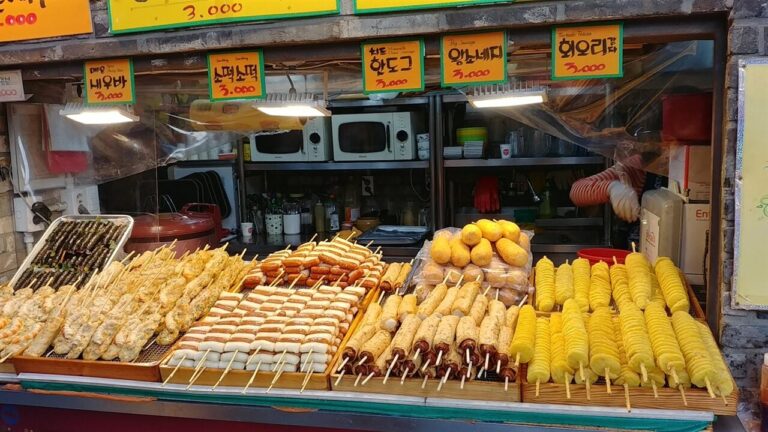
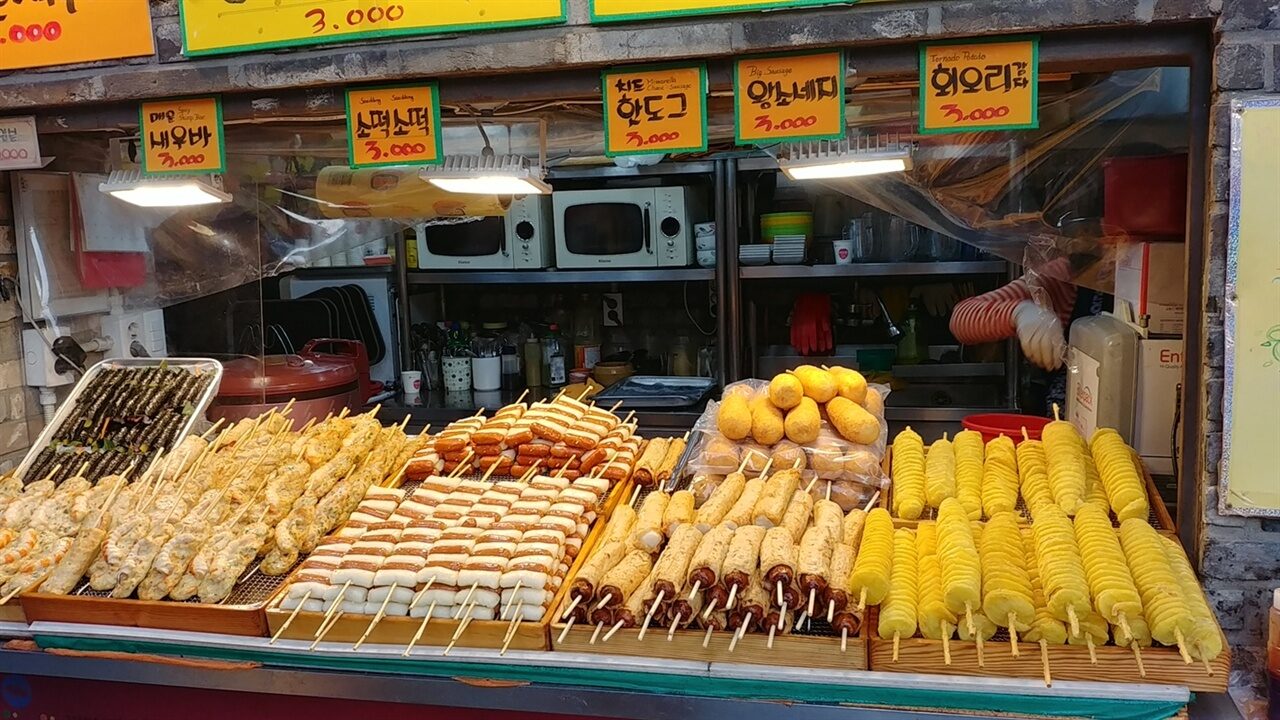
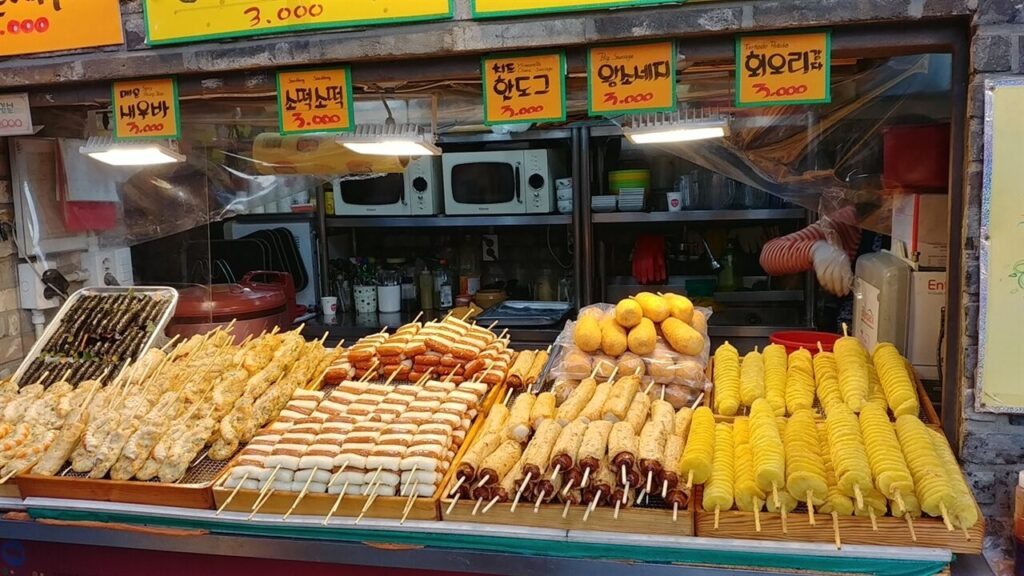
어묵 (Eomuk / Fish Cake Skewers) — ₩500–1,000 per skewer
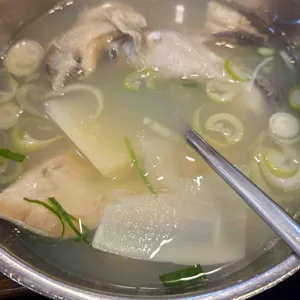
어묵 (eomuk, also called 오뎅/odeng in Busan dialect) is the default snack here. Flat sheets of processed fish cake folded onto skewers, simmered in a light anchovy broth all day. The broth itself is free — there’s a ladle next to the pot and small cups nearby, and you’re supposed to drink it while you eat. Do it. Particularly good on cold mornings, and it feels genuinely local in a way most tourist food doesn’t.
김밥 (Gimbap) — ₩2,000–3,000 per roll
A few 김밥 stalls sit toward the back of the market. A full roll of 참치 김밥 (chamchi gimbap, tuna gimbap) runs about ₩3,000 and gets cut into 8 pieces. The ahjummas (아줌마, middle-aged women) running these stalls will cut it fresh if you gesture at the roll and mime scissors. They’re used to it. Standing food — find a step or a quiet corner of the arcade.
떡볶이 (Tteokbokki) — ₩3,000–4,000
Spicy rice cakes in gochujang (고추장, red pepper paste) sauce. Honest market-style, not the polished restaurant version. Worth knowing upfront: if your spice tolerance is low, I’d skip the tteokbokki here rather than gamble on it — market versions don’t pull punches, and whatever the vendor says, results from requesting mild are inconsistent. You can try saying “안 맵게 해주세요” (an maepge haejuseyo, “please make it less spicy”), but no guarantees.
Practical Information
- Cash only at every stall I’ve visited. There’s a GS25 convenience store ATM near Haeundae Station if you need to withdraw — some machines have an English option. If yours doesn’t, the guide to paying in Korea walks through the steps.
- Hours: Most food stalls open around 8:00 AM and close somewhere between 6:00–8:00 PM, though that’s worth confirming before you make a special trip — individual stalls take random days off with no posted notice. Weekday mornings are quieter and easier to navigate. Saturday afternoons are crowded and slower.
- Language: Almost no English here. Point at what you want, hold up fingers for quantity. Nobody is going to be annoyed at you for trying.
- Seating: Very limited. A few stalls have plastic stools outside, but most of this is on-your-feet food. Standard for this kind of market.
The Inner Section Most People Skip
The market has two parts. The outer arcade along the main street is where most visitors end up — and honestly, if you stop there, you’ve only seen half of it. There’s a narrower passage further inside, easy to miss if you don’t know to look, leading to older stalls selling 전 (jeon, savory pancakes) and 순대 (sundae, Korean blood sausage with glass noodles and vegetables).
No picture menus. No window displays. If you see a large flat griddle with green pancakes cooking, that’s 파전 (pajeon, green onion pancake) — usually around ₩4,000–5,000 for a plate at a small folding table. Found this section by accident on a third visit, following an old man with a vegetable bag. Took a few minutes to realize I’d wandered somewhere most tourists hadn’t.
The ahjumma at the pajeon stall doesn’t speak English. But point at the griddle and hold up one finger — she’ll know. She pointed at the dipping sauce without being asked. That kind of thing.
Pairing the Market with a Day at the Beach
If you’re already planning a day at Haeundae Beach, this market works well as a cheap lunch stop before or after the sand. Close enough to walk back to the water in under 10 minutes. ₩10,000–15,000 is realistically enough to eat well across two or three stalls — as of recent visits, at least; prices do shift, so it’s worth having a little buffer.
Come hungry. Bring small bills. And if you get turned around, search 해운대전통시장 on Naver Map — it’ll show you the entrance and give you walking directions from your current location.
Last verified: April 2026 · Sources: Visit Busan, Naver Map – 해운대전통시장
Prices, hours, and details change frequently. Please verify on the official website before visiting.