Seomyeon Food Street: Busan’s Late-Night Eats
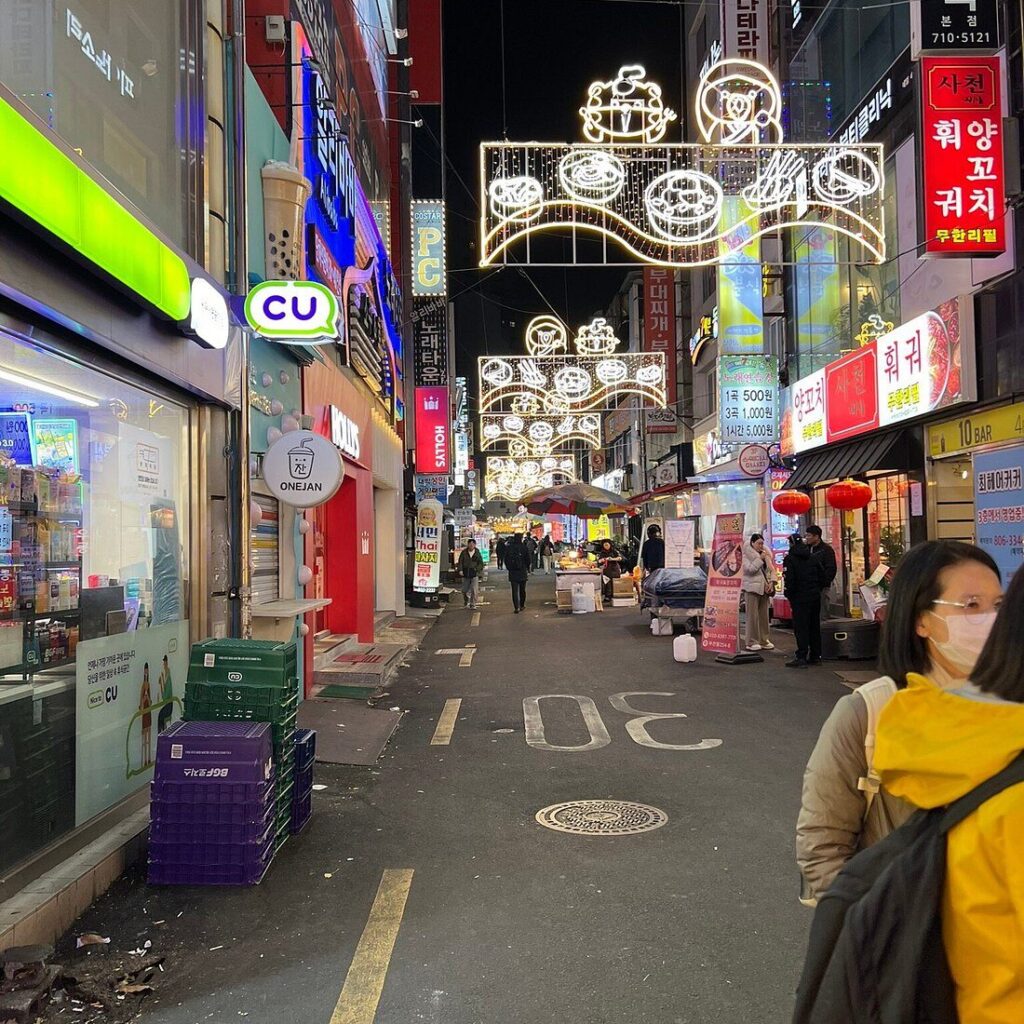
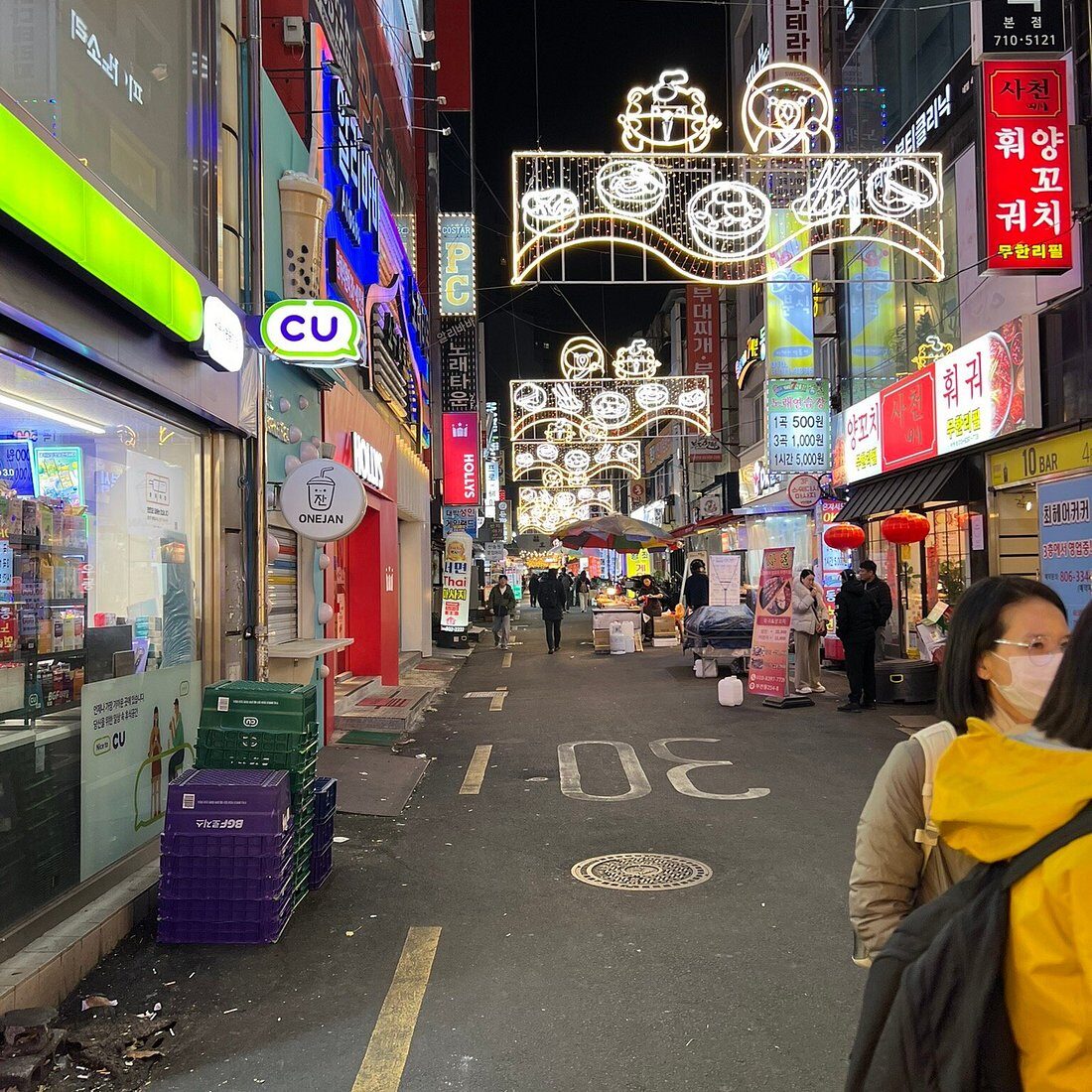
The first time I came out of Seomyeon Station at 10pm on a Friday, I almost turned back. A wall of charcoal smoke hits you at the top of the stairs. The alley ahead was so packed I couldn’t see past the first row of glowing orange pojangmacha tents — and I had no idea where to start. I stood there a good thirty seconds before someone handed me a fish cake skewer without me even asking for one.
I paid ₩500, ate it, and stayed for two hours. Now I make the trip from Haeundae at least once a month. This is what I know about the Seomyeon food street Busan locals treat as a given — and what I had to figure out on my own.
How to Get There from Haeundae
Take Busan Metro Line 2 (the green line) from Haeundae Station (해운대역) toward Yangsan and ride it to Seomyeon Station (서면역). About 30 minutes, around ₩1,700 with a T-money card. Seomyeon is a transfer hub where Lines 1 and 2 cross, so you can reach it from pretty much anywhere in the city.
Use Exit 7. When you come up the stairs, there’s a Family Mart on your left. Walk straight for about 30 seconds, then turn right into the alley. That’s 서면 먹자골목 (Seomyeon Meokja-golmok — roughly “Seomyeon eating alley”). You’ll know it by the smoke and the sound of metal tongs on a grill.
If you’re new to the Busan subway, this guide covers how to get a T-money card and navigate the metro system.
What the Street Actually Looks Like
Seomyeon Meokja-golmok (서면 먹자골목) isn’t one straight alley. It’s a cluster of interconnected passages branching off the main road — and the first time I walked in, I missed the best part entirely because I only went down the first lane and assumed that was it. Between the pojangmacha (포장마차, pronounced “po-jang-ma-cha”) — the open-front tent stalls with orange or blue tarps — there are sit-down Korean BBQ spots, fried chicken restaurants, convenience stores, and the occasional norebang (노래방, karaoke room) staircase going up to the second floor.
Go deeper. The further in you walk, the older and more low-key the stalls get. Same food, quieter crowd, and the vendors have more time for you.
To navigate it properly, search 서면 먹자골목 on Naver Map. Naver Map is the only app that reliably handles this kind of alley navigation in Busan — Google Maps doesn’t always have the small passages indexed correctly.
What to Order and What It Costs
These are the staples, with prices from late 2025 — worth confirming on arrival since they shift:
- Tteokbokki (떡볶이) — Chewy rice cakes in a thick gochujang (고추장) sauce. Spicy-sweet and filling. A small portion runs around ₩3,000–4,000. If you’re heat-sensitive, say “덜 맵게 해주세요” (deol maepge haejuseyo — “please make it less spicy”). Most vendors will accommodate this without any fuss.
- Odeng (오뎅) / Eomuk (어묵) — Fish cake on a skewer, kept warm in a pot of clear broth. Usually ₩500–1,000 per stick. The broth in the small cups beside the pot is free — you’re supposed to drink it. Don’t skip it. On a cold night it’s the best thing on the street.
- Sundae (순대) — Korean blood sausage stuffed with glass noodles and vegetables, not the dessert. Served with coarse salt and a spicy dipping sauce. About ₩4,000–5,000 for a portion. Honestly, this one divides people sharply — the texture is distinctive enough that I’ve seen first-timers take one bite and quietly set the rest down. Worth trying once, but don’t force it if it’s not clicking.
- Kkochi (꼬치) — Grilled skewers, typically pork, squid, or rice cake. ₩1,000–2,000 each. Go to whichever stall has the most smoke rising — that’s usually the one with the most active grill and better char.
- Hotteok (호떡) — A fried dough pancake filled with brown sugar, peanuts, and cinnamon. Pressed flat and handed to you in a small paper cup. Around ₩1,500–2,000. On a cold night this is what you end with.
Most stalls don’t have English menus, but picture menus are common. The ahjumma (아주머니) running the stall probably won’t speak English — but she’ll understand you pointing at what the person next to you is eating. Hold up fingers for quantity. That’s worked every single time.
When to Go
The street starts setting up in the late afternoon, but it doesn’t feel alive until after 9pm. Weekends from 10pm to 1am are the peak — alleys fill fast, and finding a free stool can take a few laps. Weeknights are a different experience entirely. Thursday nights sit in a nice middle ground: enough people that it feels lively, not so packed that you’re eating standing up.
Stalls run until 2–3am on weekends, and a handful stay open until dawn. Heavy rain thins things out — the tents have covers, but some vendors pack up early if it’s coming down hard. Worth checking the forecast.
What I Wish Someone Had Told Me First
A few practical things that weren’t obvious until I’d been a few times:
- Bring cash. The majority of pojangmacha are cash-only. There’s an ATM inside the Family Mart right at Exit 7, but it’s easier to have cash before you arrive. This post breaks down how cash and card payments work across Korea if you’re unsure what to expect.
- Don’t arrive before 9pm. I showed up at 7:30pm once and half the stalls were still unfolding their chairs. Save yourself the walk.
- Seating is communal. At a pojangmacha you sit wherever there’s space, often next to strangers eating the same thing. Completely normal. Nobody looks at you oddly for sitting down next to a group you don’t know.
- Check your last train time. The last subway on Line 2 from Seomyeon toward Haeundae runs around midnight on weekdays and a little later on weekends — though it’s worth double-checking before you go. Miss it and you’re in Kakao Taxi territory: reliable, and you can set your destination in the app without needing to speak Korean (the driver sees it in Korean on their end).
- The smoke is real. On still nights when every grill is running, the alley gets thick with it. Light-colored clothes or anything dry-clean only — maybe reconsider those before heading out.
One more thing: prices at pojangmacha aren’t always posted prominently. Before you sit down, asking “얼마예요?” (eolma-eyo? — “how much?”) is completely fine. Nobody takes it as rude. Just practical.
Last verified: April 2026 · Sources: Visit Busan, Naver Map – 서면 먹자골목
Prices, hours, and details change frequently. Please verify on the official website before visiting.