Haedong Yonggungsa: Busan’s Stunning Sea Temple
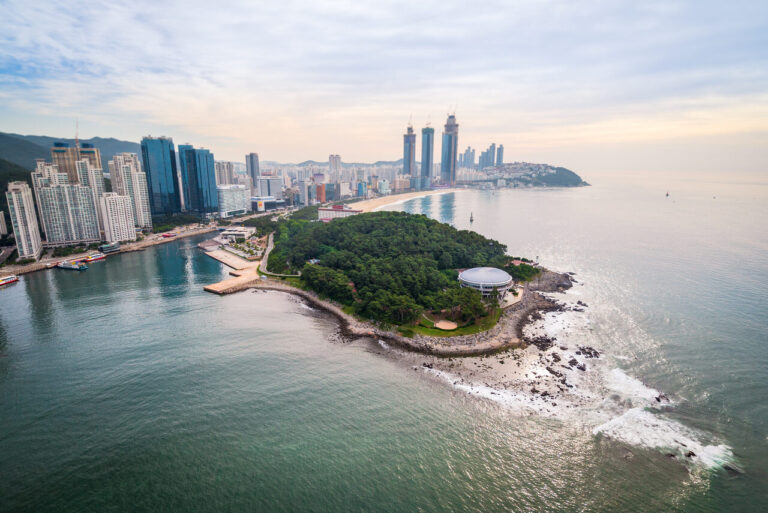
If you’re staying in Haeundae and want a day trip that actually feels different, Haedong Yonggungsa is worth the 40-minute bus ride. I’ve brought visitors here more than anywhere else in Busan. It’s not just the sea views — it’s the whole sequence of it: arriving through a small market, walking down stone stairs past dragon statues, then landing at a Buddhist temple where waves crash against the rocks below. That combination doesn’t exist anywhere else.
The temple is written 해동 용궁사 in Korean (pronounced “hay-dong yong-goong-sa”). Yonggung (용궁) means “dragon palace,” and sa (사) means “temple.” Founded in 1376 during the Goryeo Dynasty, it’s unusual among Korean Buddhist temples — most are tucked deep in mountain forests, but this one sits directly on coastal cliffs in 기장군 (Gijang-gun), a district on Busan’s northeastern edge.
How to Get to Haedong Yonggungsa from Haeundae
No taxi needed. No tour group required. The local bus is straightforward, and I’ve done this solo more times than I can count. If you haven’t set up navigation yet, this guide to using Naver Map in English will make the whole trip easier before you leave.
Here’s the route:
- Walk or take the metro to Haeundae Station (해운대역) on Line 2 (orange line).
- From the bus stop near exit 3 or 5, board Bus 181 toward Gijang.
- Ride for about 35–40 minutes and get off at 용궁사 입구 (Yonggungsa Ipgu). Ipgu (입구) means “entrance.”
- Walk downhill for about 10 minutes to reach the temple gate.
The ride runs about ₩1,500–₩1,700 with a T-Money card — as of early 2026, though fares do get adjusted occasionally. Bus 100 and Bus 1001 also pass near the temple from central Busan, but from Haeundae specifically, Bus 181 is the most direct. If you’re new to T-Money and how the buses work, this Busan subway and T-Money guide covers the basics.
What to Expect at the Entrance Market
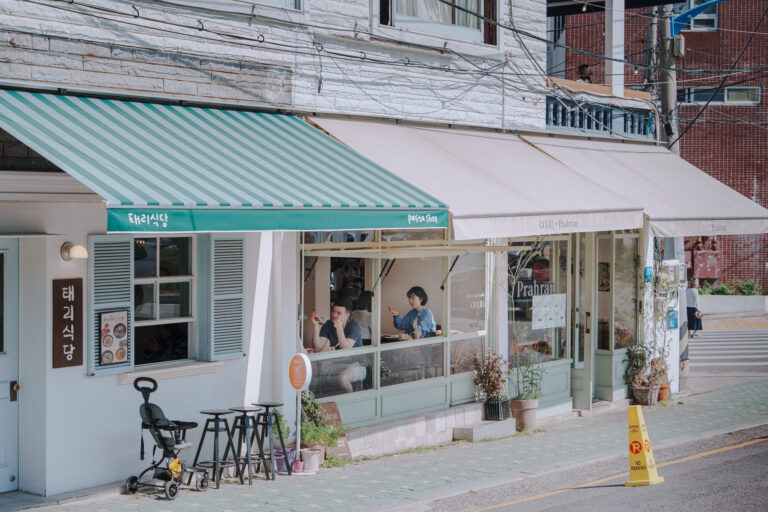
The 10-minute walk from the bus stop to the temple gate passes through a small market — 용궁사 입구 시장 (Yonggungsa Ipgu Sijang). Sijang (시장) means “market.” Vendors selling souvenirs, Buddhist goods, and Korean street food line both sides of the path.
Honestly, some of the souvenir stalls feel like a tourist trap — overpriced trinkets, and a few vendors can be a bit pushy. Skip those. But the food stalls are a different story. On a recent visit I picked up a 호떡 (hotteok) for ₩1,000 — a warm, chewy pancake filled with brown sugar and cinnamon. There’s also 오뎅 (odeng), fish cake skewers served in a light broth. Simple food, but the hotteok especially is worth it on a cold morning.
You’ll also see stalls selling 소원 돌 (sowon dol) — “wish stones” — small painted rocks that people bring into the temple grounds to leave as offerings. These run around ₩1,000–₩3,000. The temple entrance itself is free.
Bring cash. Vendors here don’t take cards.
The Best Time to Visit
Weekends can get genuinely overwhelming. I made the mistake of coming on a Saturday afternoon in peak summer — spent more time navigating the crowd than actually looking at anything. If your schedule allows, aim for a weekday morning. Arriving before 9am means you’ll have most of the grounds to yourself.
The temple opens at sunrise — around 5:00am in summer, later in winter — and stays open until sunset. No strict gate closing, but vendors and staff pack up by evening. Hours can shift by season, so worth a quick check before you head out.
My preference is early morning in autumn. Good light, clear air, quiet enough to actually hear the waves. Spring mornings work almost as well.
One thing worth knowing: during 설날 (Seollal) — Korean Lunar New Year — and 추석 (Chuseok) — the autumn harvest festival — the temple draws large crowds for sunrise prayers. The atmosphere is meaningful and specific to Korean Buddhist culture. But expect the entire area to be packed from dawn.
What to See Inside the Temple Grounds
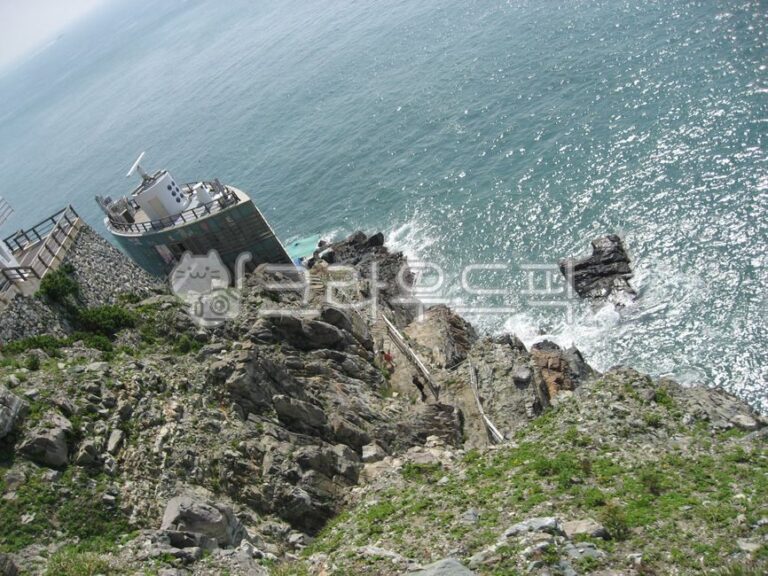
What makes this place stand out from any other temple visit in Korea: the sea is always present. You hear it before you see it. Once you’re on the main platform, it’s directly below you.
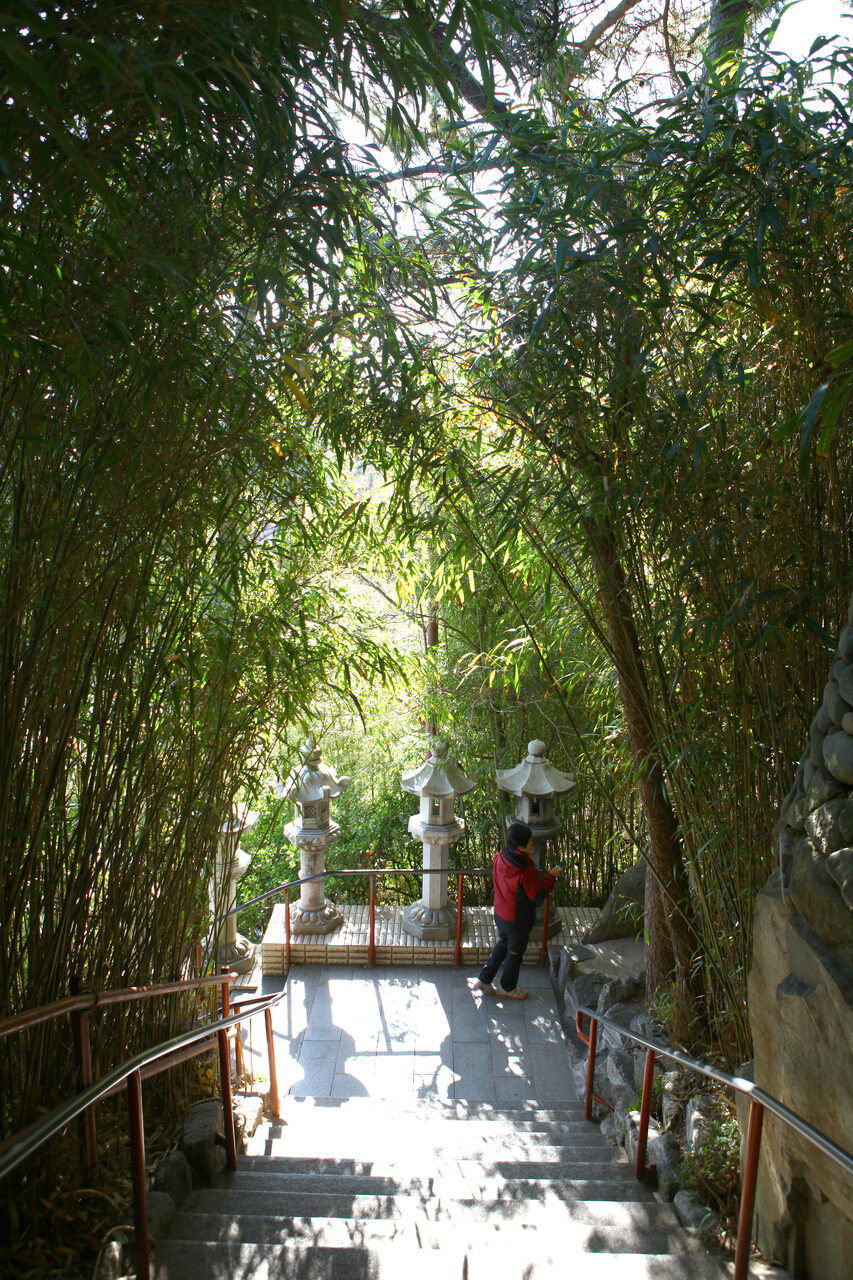
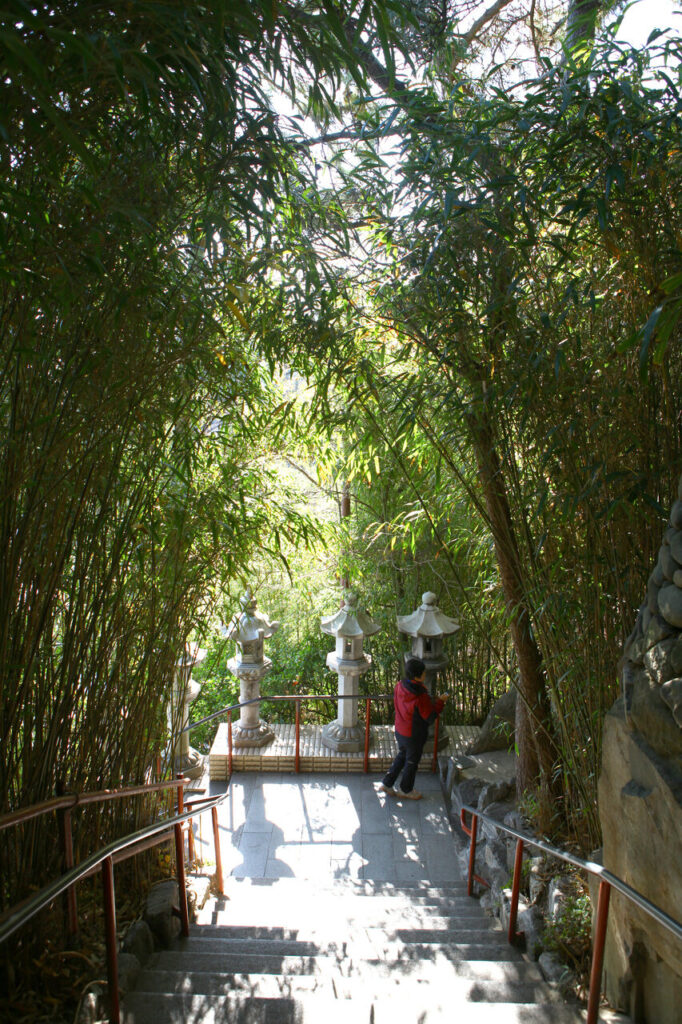
After passing through the entrance gate, you walk down a long staircase flanked by the 12 지지 (jiji) — zodiac animal statues, each representing a year in the lunar calendar. People stop to find their birth year animal and touch it for luck.
On the grounds, the main things to see:
- 해룡대불 (Haeryong Daebul) — a large golden Buddha statue facing the open sea. Daebul (대불) means “great Buddha.”
- 대웅전 (Daeungjeon) — the main worship hall, built on the cliff edge. An active place of worship; people are often praying inside. Keep your voice low and bow when you enter.
- 용왕당 (Yongwangdang) — a small shrine dedicated to the Dragon King of the Sea. It sits closest to the water; during rough weather or high tide, waves spray the rocks right in front of it.
- 소원 바위 (Sowon Bawi) — a wishing rock near the shoreline where people stack small stones. Sowon (소원) means “wish,” bawi (바위) means “rock.”
You can find the temple easily on Naver Map before you head out.
Practical Information
| Detail | Info |
|---|---|
| Address | 부산 기장군 기장읍 용궁길 86 (86 Yonggung-gil, Gijang-eup, Gijang-gun, Busan) |
| Entrance Fee | Free |
| Hours | Sunrise to sunset (approx. 5:00am–8:00pm, varies by season — confirm before visiting) |
| Bus from Haeundae | Bus 181, stop at 용궁사 입구 |
| Fare | ₩1,500–₩1,700 with T-Money (as of early 2026) |
A few final tips before you go:
- Dress modestly. This is an active Buddhist temple. No strict dress code, but covered shoulders and knees are respectful.
- Photography is allowed in most areas — avoid photographing people praying inside the halls.
- Wear flat shoes. The stairs and coastal rocks are uneven. Heels are a bad idea here.
- Go early. I can’t overstate how much better the experience is before the tour buses arrive.
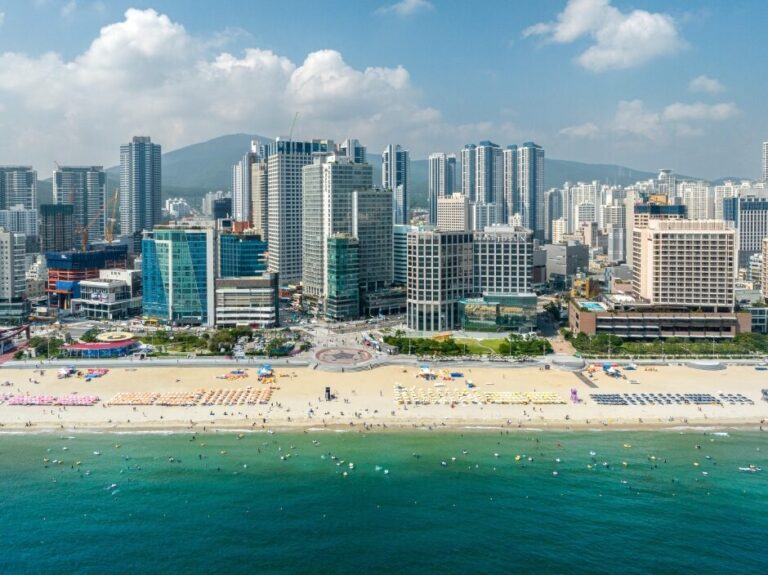
It’s an easy half-day from Haeundae — go in the morning, take your time on the grounds, grab something from the market on the way out, and you’ll be back by early afternoon. The Haeundae Beach area has plenty of options for the rest of the day.
Last verified: April 2026 · Sources: Visit Busan, Naver Map
Prices, hours, and details change frequently. Please verify on the official website before visiting.