Gijang Crab Market: Day Trip from Haeundae
If you’re staying in Haeundae and want genuinely fresh seafood — not the tourist-priced stuff near the beach — Gijang is the answer. Twenty minutes by train. The crab is live, you pick it from the tank, and it comes out steamed while you wait. Nothing else in the city quite replicates it. I’ve made this trip more times than I can count — here’s exactly how it works.
How to Get to Gijang from Haeundae
By Subway (Recommended)
Take the Donghae Line (동해선) from Haeundae station to Gijang station (기장역). About 20 minutes, and roughly 1,500 won with a T-money card as of late 2025 — fares do adjust, so worth a quick check before you go. One thing to watch: the Donghae Line has its own Haeundae platform, separate from the main subway lines. Look for signs marked 동해선 inside the station complex. Trains run every 15–20 minutes throughout the day.
From Gijang station, the seafood market is about a 10-minute walk east toward the port (기장항, Gijang-hang). Open Naver Map and search 기장수산시장 for walking directions from the exit. And if you haven’t sorted your T-money card yet, the Busan subway and T-money guide is worth a read before you leave.
By Taxi
A taxi from Haeundae takes 25–35 minutes depending on traffic and comes to around 20,000–30,000 won. Better value for groups, or if you’re buying large quantities of live seafood to cook at home. Kakao T handles the booking — no Korean required.
What You’ll Find at Gijang Crab Market Busan
The market clusters around 기장수산시장 (Gijang Susanjang — Gijang Seafood Market) near Gijang Port (기장항, Gijang-hang). No mall, no food court. Just open-air stalls, salt air, and the sound of crabs shifting in shallow tanks. Vendors are mostly local women in aprons and rubber gloves — stalls start right where the boats unload.
The two crabs you’ll see most:
- 꽃게 (kkotgeh — blue crab): Medium-sized with distinctive blue-tipped claws. In season spring through autumn. Expect around 20,000–40,000 won per kg depending on size and the day’s catch — prices shift more than you’d think.
- 대게 (daegeh — snow crab): Long spindly legs, sweet white meat. Peak season runs November through May. Budget 30,000–60,000 won per kg; prices climb steeply during the winter rush.
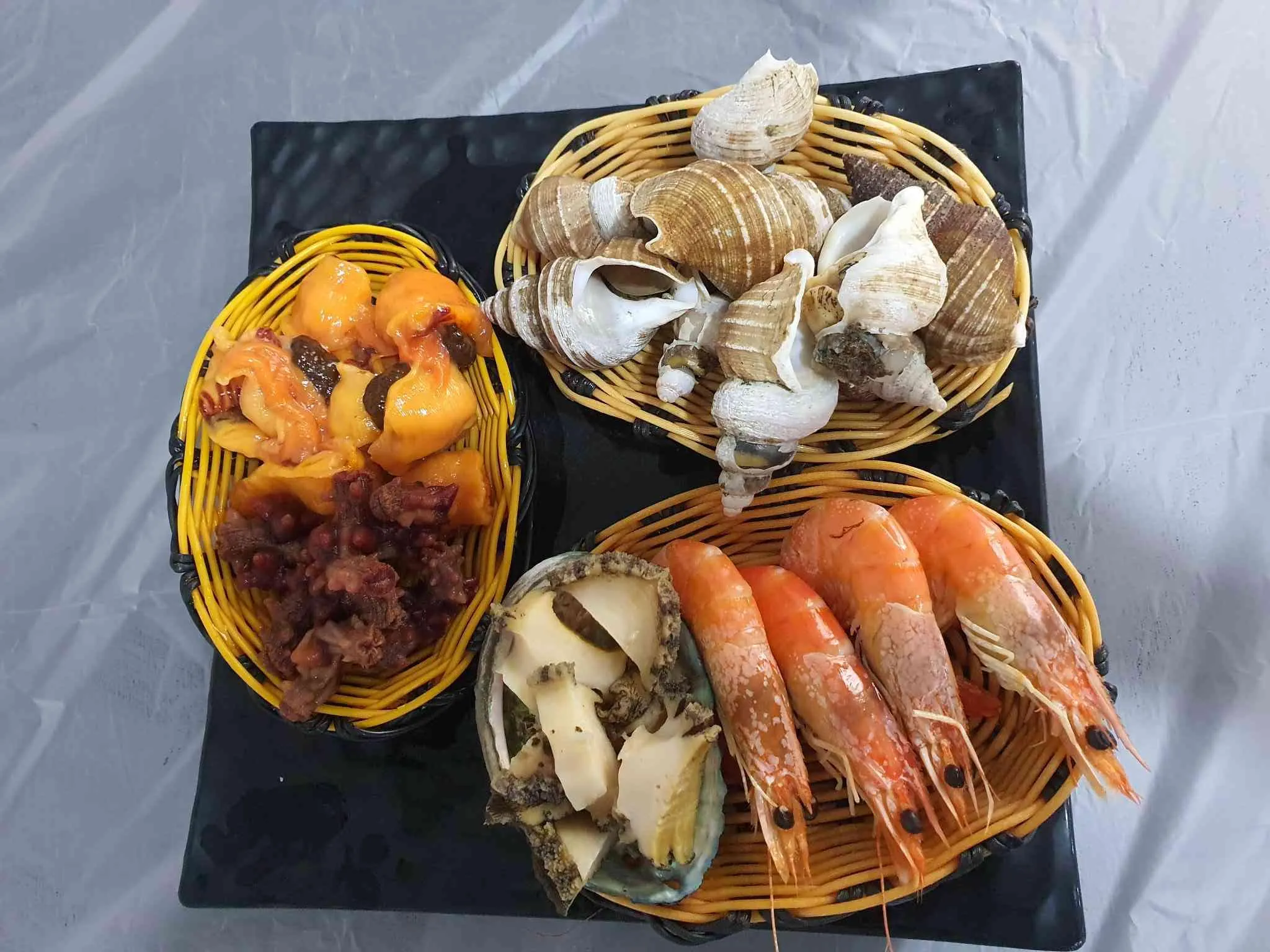
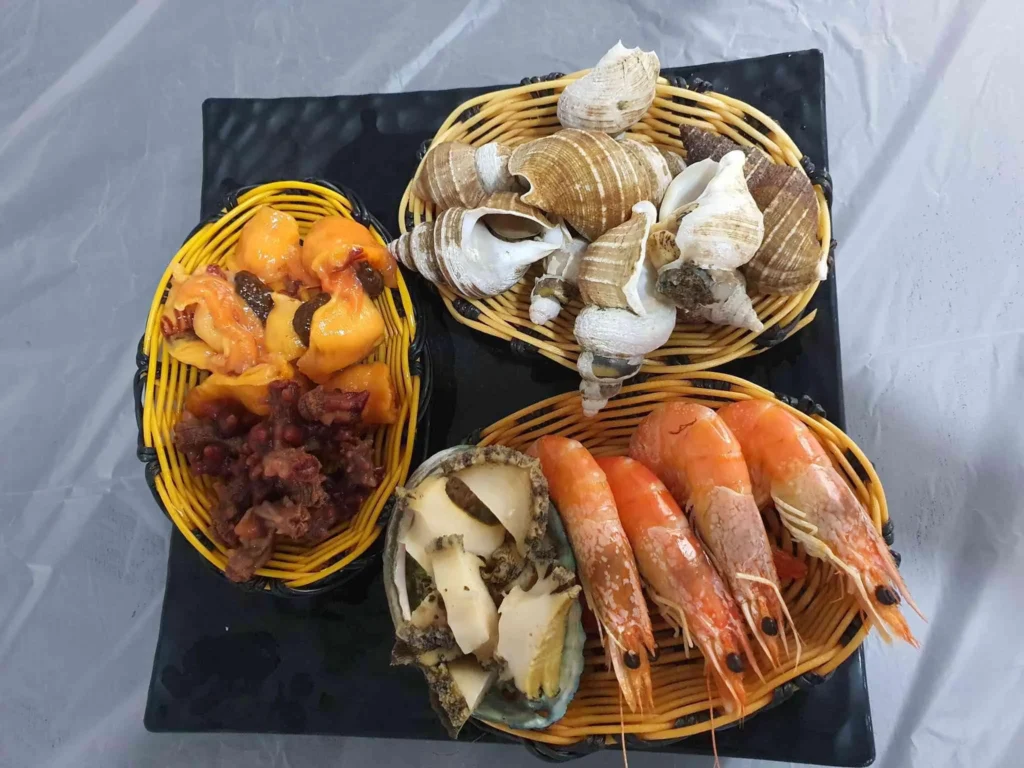
Beyond crab, you’ll find 활어회 (hwareohoe — live fish sashimi), abalone (전복, jeonbok), sea cucumber, shellfish in every size. Some vendors are loudly competitive. You’re completely free to walk past and look before committing to anything.
How to Buy and Cook Your Crab: Step by Step
This is the part that makes most first-timers nervous. Once you know the sequence, it’s straightforward.
- Walk the full row of stalls before stopping. Prices and quality vary between vendors — sometimes significantly.
- When you see something you want, point at it and say 이거 주세요 (igeo juseyo — “this one, please”).
- The vendor picks it up, sometimes prods it to show it’s alive, then weighs it. Price comes up on a calculator or via fingers. You can negotiate, but gently.
- Once you agree, they bag it. Pay in cash (현금, hyeongeum). Most stalls are cash-only; a handful now accept cards. Ask first: 카드 돼요? (kadeu dwaeyo? — “card okay?”). The guide to paying in Korea covers exactly what to expect at stalls like these.
- Take your bagged crab to one of the small restaurants or covered stalls (포장마차, pojangmacha) directly beside the market. They’ll cook it — usually a cooking fee of 3,000–5,000 won per crab, though confirm on the day.
- Tell them how you want it: 찜으로 해주세요 (jjimeuro haejuseyo — “please steam it”). Steaming (찜, jjim) is standard and takes 20–30 minutes.
- It comes out with rice, kimchi, and a few 반찬 (banchan — side dishes). Eat with your hands. No elegant way around it.
The whole thing — buying to eating — usually runs under an hour. On my first visit I nearly walked out over the price display; turned out she was showing the per-100g price, not the total. Point at the whole crab and ask 전부 얼마예요? (jeonbu eolmayeyo? — “how much for all of it?”) to avoid the same confusion.
One honest note: the pojangmacha stalls right at the market entrance tend to charge more than the ones a little further back — same steamed crab, different price. Worth walking an extra minute to find a better deal before you sit down.
Tips for Foreigners Navigating the Market
The language barrier here is real — most vendors speak Korean only. But it’s manageable once you have a basic system.
- Use a calculator app for price negotiations. Passing the phone back and forth works at every stall.
- The ajeomma (아줌마 — older women vendors) can be persistent. A smile, a small head shake, and a step forward is enough to move on without offence.
- Restaurant menus nearby usually have photos or plastic food displays. Point at 꽃게찜 (kkotgejjim — steamed blue crab) or 대게찜 (daegejjim — steamed snow crab) and you’ll be understood immediately.
- Bring enough cash to cover the crab price plus the cooking fee plus drinks. No ATM inside the market itself.
- Go in the morning. Stalls open around 7–8am and the selection peaks before noon — by mid-afternoon, the best stalls are often sold out.
- Avoid Monday mornings — some vendors close after a busy weekend, and the selection is noticeably thinner.
Practical Info Before You Go
| Location | 기장수산시장, near 기장항 — 부산광역시 기장군 기장읍 기장해안로 일대 |
| Getting there | Donghae Line (동해선) → Gijang station (기장역) → 10-min walk east |
| Hours | Approx. 7am–6pm — individual stall hours vary; worth confirming before visiting |
| Best season | 꽃게: spring through autumn | 대게: November through May |
| Budget for two | 30,000–70,000 won including crab, cooking fee, rice, and drinks |
| Payment | Cash strongly preferred; some stalls take card |
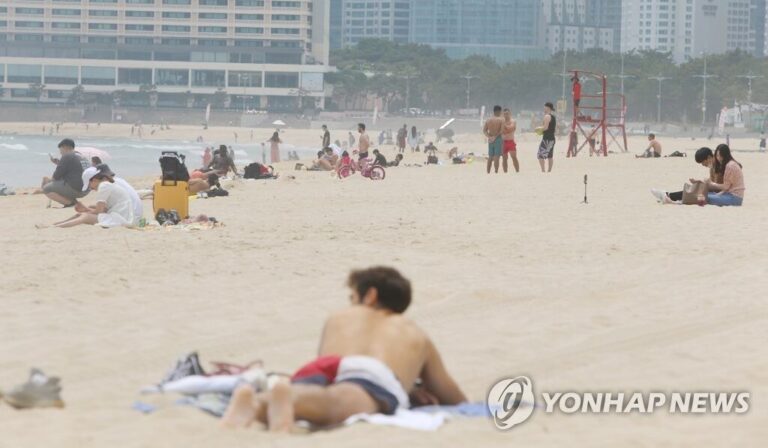
If you want to make a full day of it, the Haeundae Beach area is an easy stop on the way back — same 20-minute train ride in reverse. The Gijang crab market trip works well as a late morning outing: leave Haeundae around 9am, eat by noon, and you’re back in time for the afternoon beach crowd.
Last verified: April 2026 · Sources: Visit Busan, Naver Map – 기장수산시장
Prices, hours, and details change frequently. Please verify on the official website before visiting.