Ssiat Dwaeji Gukbap: Busan’s Famous Pork Soup
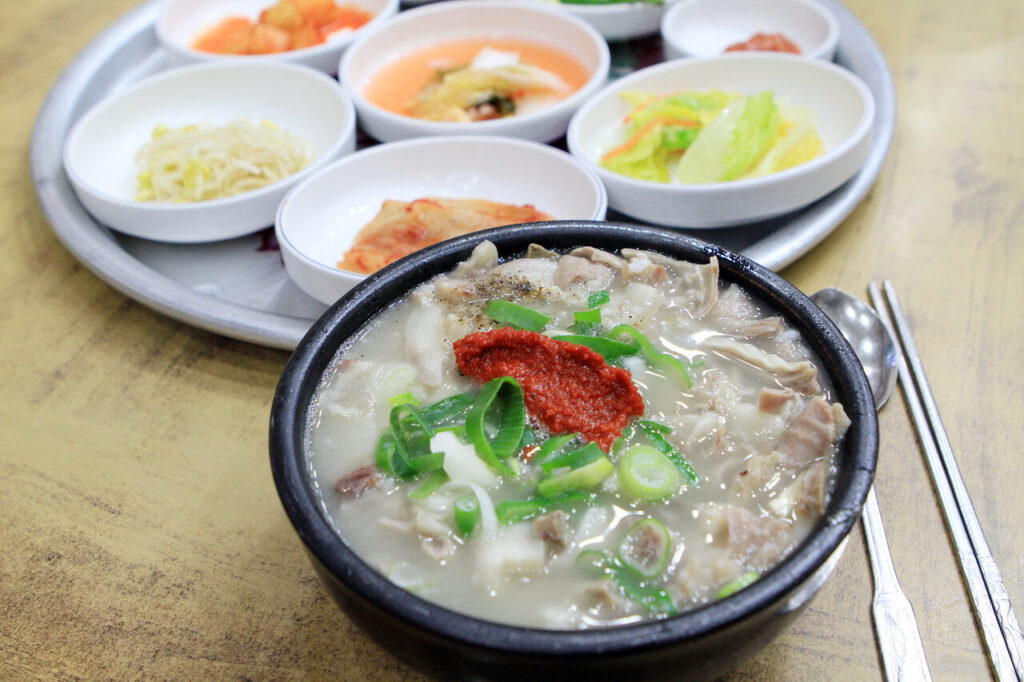
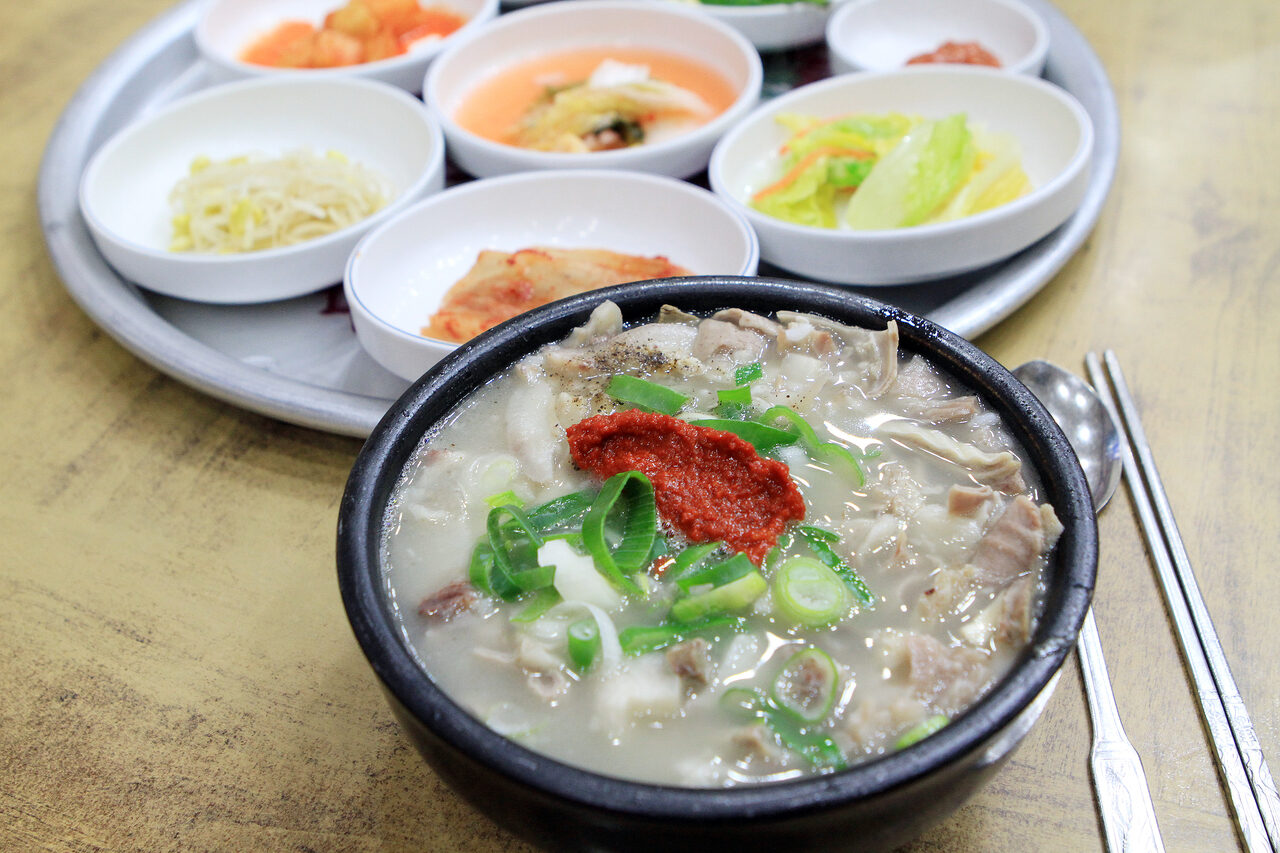
If there’s one dish that defines eating in Busan, it’s dwaeji gukbap (돼지국밥, pronounced dway-ji guk-bap) — a milky pork bone broth served with rice and a heap of thinly sliced pork. Ask any local which Busan pork soup restaurant to visit, and there’s a good chance they’ll say Ssiat Dwaeji Gukbap. I live in Haeundae, so the branch near the beach has become something of a neighborhood canteen. Here’s what to know before you go.
What Is Dwaeji Gukbap — And Why Busan Takes It Seriously
Dwaeji gukbap is Busan’s answer to Korean pork bone soup. The broth simmers for hours until it turns thick and opaque white — rich but surprisingly clean, more savory than fatty. It comes with a separate bowl of steamed rice that you eat alongside the broth, or dump straight in. Most locals dump it in. No hesitation.
Unlike Seoul-style soups, Busan’s version arrives under-seasoned on purpose. The seasoning is your job. You’ll get a tray of condiments — fermented shrimp paste, chili flakes, salt — and the expectation that you build the flavor yourself. Sounds intimidating. It isn’t, once you know what to reach for (more on that below).
Ssiat Dwaeji Gukbap (씨앗돼지국밥) is one of the most recognized local chains in the city. Ssiat (씨앗) means “seed” — a bit abstract as restaurant names go, but the branding is clean and the food is consistent across locations. The Haeundae branch is the one I keep returning to.
Finding the Haeundae Branch
The Haeundae branch sits at 부산 해운대구 해운대해변로 298, a short walk from Haeundae Beach. Coming from Haeundae Station (해운대역) on subway Line 2, it’s roughly a 10-minute walk toward the water. Pull it up on Naver Map before you go — searching 씨앗돼지국밥 해운대 gets you there directly. If you’re new to the app, the Naver Map guide for English speakers is worth a quick read first.
Hours: Daily, roughly 7:00am to 11:00pm — though some locations reportedly run 24 hours. Worth confirming before a late-night visit, as hours can shift.
How to Order
The menu is short. Here’s what matters:
- 기본 돼지국밥 (gibeon dwaeji gukbap) — the standard bowl, mixed pork cuts. What I always get. Around 10,000 KRW as of early 2026.
- 내장 돼지국밥 (naejang dwaeji gukbap) — includes organ meat (intestines, liver). About the same price. Worth trying if you’re comfortable with offal; skip it if you’re not sure.
- 순대국밥 (sundae gukbap) — made with Korean blood sausage instead of sliced pork. Around 10,000 KRW.
- 공기밥 (gonggi bap) — extra rice, usually 1,000 KRW. Get it if you’re hungry.
Most branches use a kiosk or counter system. Point and gesture works fine. If you want to keep it simple, say “이거 하나요” (igeo hana yo — “one of this”) while pointing at the menu board.
One honest note: the lunch rush on weekends can get busy — the queue moves, but it moves slowly. Come before 11:00am if you can. It’s noticeably quieter and you won’t be eating shoulder-to-shoulder with half of Haeundae.
How to Season and Eat It
This is the part most guides skip. Your bowl arrives looking pale and tasting fairly mild. That’s intentional. On the table you’ll find:
- 새우젓 (saeujeot) — salted fermented shrimp. Add a small spoonful to the broth. This is the essential seasoning for the dish. Don’t skip it.
- 깍두기 (kkakdugi) — cubed radish kimchi. Eat alongside or stir directly into the broth for acidity.
- 부추무침 (buchu muchim) — seasoned chive salad. Pile it into the bowl or eat it separately.
- 소금 (sogeum) — plain salt, for fine-tuning at the end.
- 고추가루 (gochugaru) — chili flakes if you want heat.
Start with the saeujeot — one small spoon. Stir. Taste. Add more if needed. Then drop your rice into the broth. That’s the Busan way. The kkakdugi on the side cuts through the richness nicely.
Everything comes with a small plate of 깍두기 (kkakdugi) and sometimes thin slices of salted green onion. All refillable for free — just say “더 주세요” (deo juseyo — “more please”).
What I Actually Think
I’ve been back a number of times. The broth is consistent — properly milky, not watered down, with enough collagen that it coats the spoon. The pork in the standard bowl is a mix of leaner and fattier cuts, all sliced thin enough to go tender in the hot broth.
Not a glamorous meal. The interior is functional; tables are close together and it gets loud during lunch. That’s exactly the point. This is everyday Busan food, and the atmosphere matches.
One thing worth saying honestly: the first time I tried dwaeji gukbap here, I under-seasoned it and couldn’t figure out what all the fuss was about. Once I got the saeujeot ratio right, everything clicked. Don’t be shy with the fermented shrimp.
Practical Info at a Glance
| Detail | Info |
|---|---|
| Address | 부산 해운대구 해운대해변로 298 |
| Hours | Daily ~7:00am – 11:00pm (verify before visiting) |
| Price | ~10,000–11,000 KRW per bowl (as of early 2026) |
| Nearest Station | Haeundae Station (해운대역), Line 2 — ~10 min walk |
| Payment | Cash and card accepted |
If you’re unsure about card versus cash in Korea, this guide to paying in Korea covers what to expect. Most restaurants like this accept both — but having some cash as backup doesn’t hurt.
Pork soup is a breakfast food, a hangover cure, a late-night meal, and a cheap lunch all at once. Locals eat it at every hour. After a morning walk along Haeundae Beach, stopping here before 9am is one of my favorite ways to start the day in Busan.
Last verified: April 2026 · Sources: Visit Busan, Naver Map – 씨앗돼지국밥 해운대
Prices, hours, and details change frequently. Please verify on the official website before visiting.