Dongnae Pajeon: Busan’s Famous Green Onion Pancake
If you’ve asked locals what to eat in Busan, someone has pointed you toward dongnae pajeon. Not at Haeundae. Not on the tourist maps. It doesn’t photograph as dramatically as raw fish at Jagalchi — but it’s one of the dishes that actually separates Busan from everywhere else in Korea. Most visitors miss it entirely; the Dongnae neighborhood isn’t exactly on the standard circuit. I made the trip out specifically for this, and here’s what to expect.
What Is Dongnae Pajeon, and Why Is It Different?
파전 (pajeon, pa-jeon) means savory pancake made with 파 (pa), green onion. You’ve probably seen smaller, thinner versions at street stalls or in Seoul. Dongnae pajeon is not that.
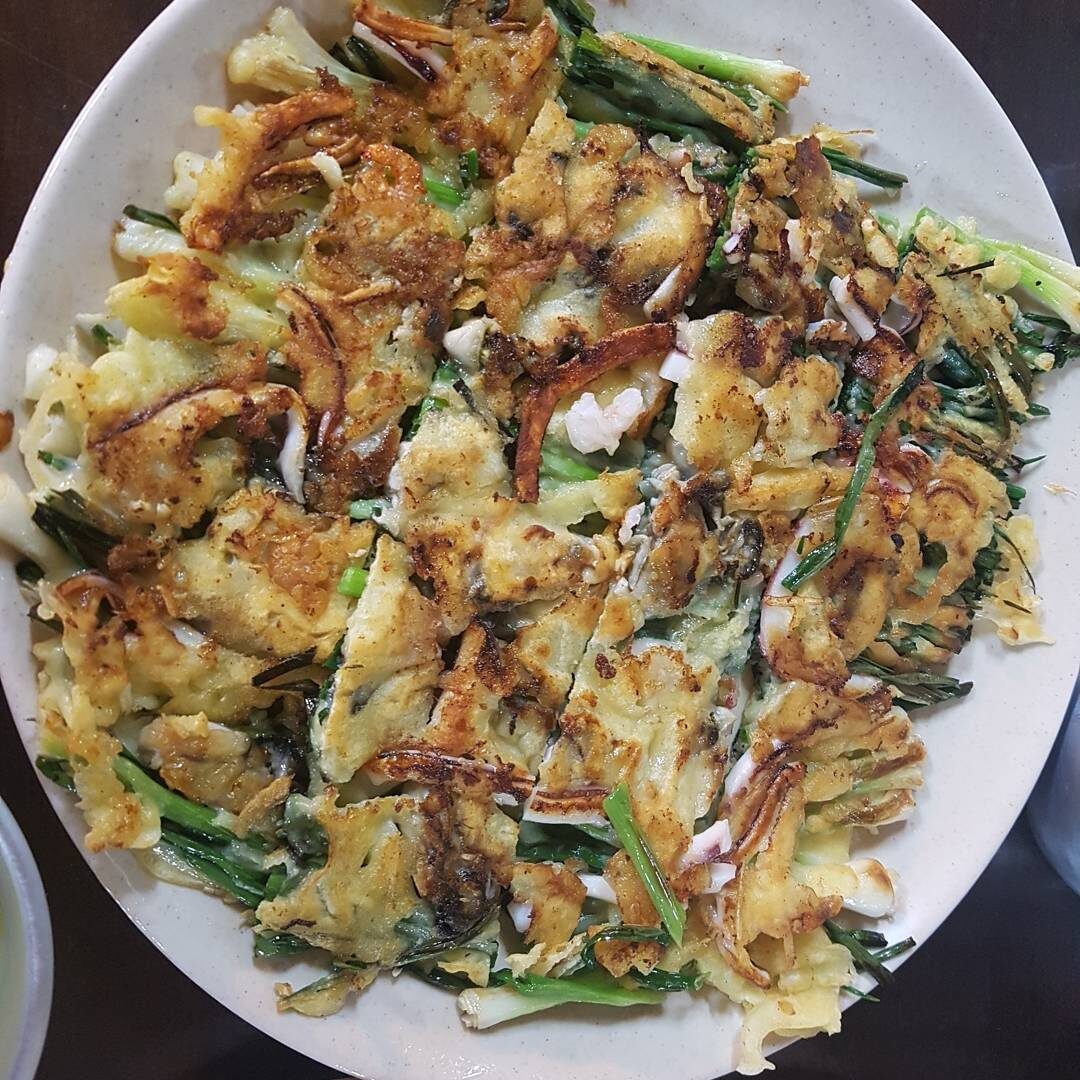
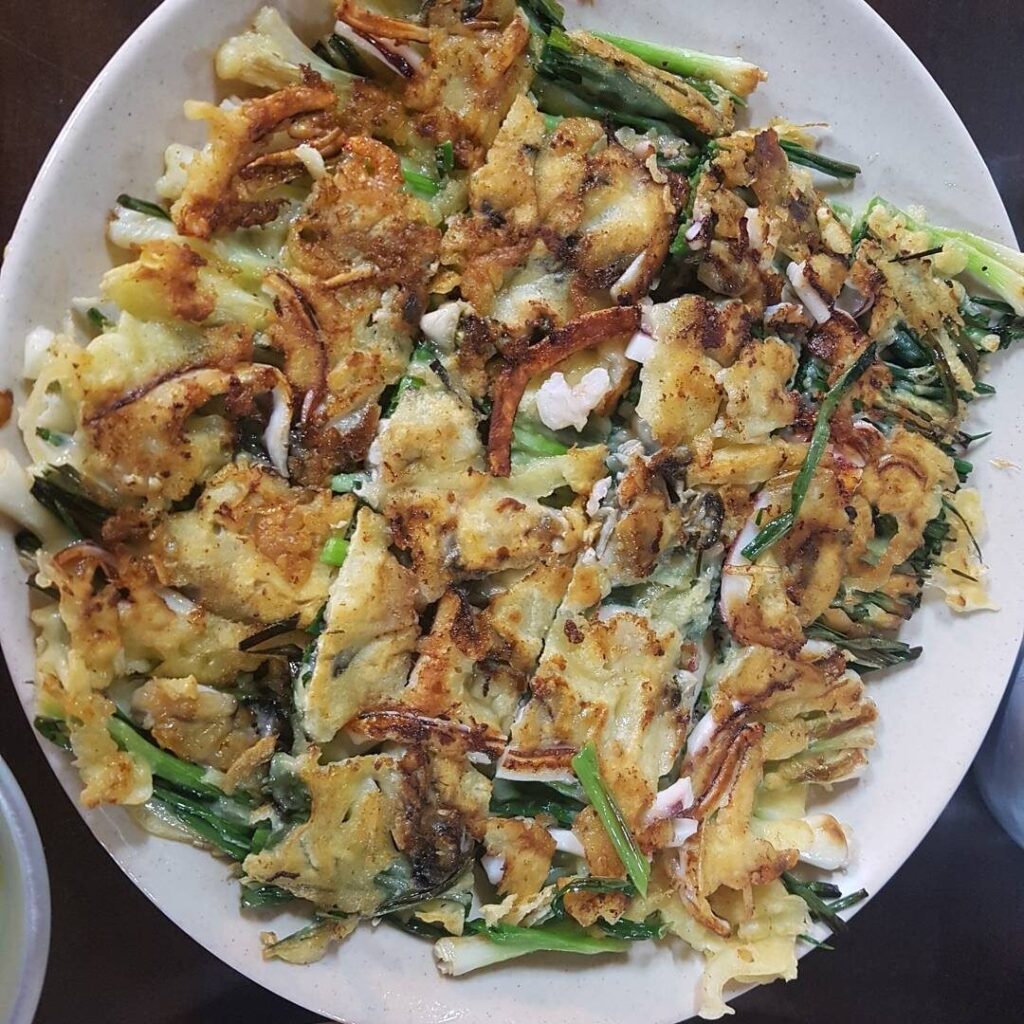
The Dongnae version is thick and wide — often the size of a dinner plate — and made almost entirely of large green onions layered with seafood. Batter is minimal. What you’re actually eating is mostly 쪽파 (jjokpa, thin green onions), 굴 (gul, oysters), 조개 (jogae, clams), and sometimes 새우 (saeu, shrimp), all bound together by a thin egg-and-flour coating. The outside gets crispy in spots. The inside stays soft, almost custardy.
The history is real. Dongnae was the site of a Joseon Dynasty detached palace — 행궁 (haenggung) — and this style of pajeon was reputedly prepared for court visitors. Whether that’s fully documented or partly local legend, the dish has been taken seriously in this neighborhood for generations. That’s how it built the reputation it still holds today.
Where to Eat Dongnae Pajeon in Busan
The main destination is the pajeon alley — 파전골목 (pajeon golmok, pa-jeon gol-mok) — near Dongnae Market. Several restaurants line this stretch, most of them family-run and decades old. The most recognized by name is 동래할매파전 (Dongnae Halmae Pajeon, “Dongnae Grandmother’s Pajeon”), which has been operating for multiple generations.
- Name: 동래할매파전 (Dongnae Halmae Pajeon)
- Address: 부산 동래구 동래시장 인근 (near Dongnae Market, Dongnae-gu, Busan)
- Hours: Roughly 11:00–21:00, though hours shift by day and season — worth confirming before you make the trip
- Price: One large pajeon (대, dae) runs around 20,000–25,000 KRW as of early 2026 and feeds two to three people comfortably
- Payment: Cash preferred; some spots now accept card
Use Naver Map to locate 동래할매파전 and confirm the address before you leave. If you haven’t used Naver Map yet, our guide to using Naver Map in English will get you set up in five minutes.
On a recent Saturday afternoon, the main restaurant and the place next door both had tables filling up fast. Arriving by noon, or waiting until after 2 PM, saves you a wait.
Getting to Dongnae from Haeundae
Dongnae isn’t walkable from Haeundae, but the subway route is simple.
- Take Busan Metro Line 2 from Haeundae station (해운대역) toward Seomyeon
- Transfer at Seomyeon station (서면역) to Line 1 heading north
- Get off at Dongnae station (동래역) — Line 1, Exit 1 or 2
- Walk roughly 10 minutes toward 동래시장 (Dongnae Market) to reach the pajeon alley
Total travel time from Haeundae: around 35–40 minutes. A T-money card makes the whole thing easy. Our Busan subway and T-money guide covers everything if you haven’t sorted transit yet.
One honest take: if you’re only in Busan for a weekend, a round trip of over an hour is a real commitment. I think the meal earns it — but I won’t pretend it’s a convenient detour.
How to Order
The menu at most Dongnae pajeon restaurants is short. Sometimes just one or two items. Here’s what to say:
- 파전 하나 주세요 (pajeon hana juseyo) — “One pajeon, please”
- For size: 대 (dae) = large, 소 (so) = small. Two people should order large.
- To add rice wine: 막걸리도 주세요 (makgeolli do juseyo) — “Makgeolli too, please”
막걸리 (makgeolli, mak-geo-lli) is a milky, slightly fizzy rice wine. It’s the traditional pairing with pajeon — the sourness cuts right through the richness of the pancake. A jug runs about 5,000–7,000 KRW (as of early 2026; prices do shift). I ordered it without thinking twice, and it made the whole meal.
The restaurant will bring a dipping sauce — 양념장 (yangnyeomjang, yang-nyeom-jang) — a soy base with chili, vinegar, and sesame. Use it on every bite.
Bring cash. Older restaurants in the Dongnae market area often prefer it, and card payment isn’t always guaranteed. Our post on paying in Korea covers what to expect with cash versus card versus phone.
Tips Before You Go
- Go hungry. One large pajeon between two people is a full meal. Two large between two people is optimistic.
- Weekday afternoons are quieter. Saturday lunch fills up fast. On a recent weekend visit I waited about 15 minutes for a table around 1 PM.
- No English menu is common. There are usually only one or two items anyway. Point at what someone nearby is eating if needed.
- The pajeon arrives sizzling. Let it settle for a minute before you cut in. Use the scissors and metal tongs on the table — that’s how Koreans do it.
- It’s not just lunch food. Most spots stay open into the evening, and ordering makgeolli with pajeon at dinner is completely normal here.
The real dongnae pajeon experience in Busan isn’t sold at the beach or in the tourist corridor. You have to take the subway north to a neighborhood that doesn’t appear on most itineraries. That 40-minute ride, the walk through the market, the sizzle when the pancake lands on the table — that’s the point. It doesn’t feel like a performance for visitors. Because it isn’t one.
Last verified: April 2026 · Sources: Visit Busan, Naver Map – 동래할매파전
Prices, hours, and details change frequently. Please verify on the official website before visiting.