Busan Beaches Compared: Haeundae vs Gwangalli vs Songjeong (2026)
Busan has a beach for every mood — and I mean that literally. I’ve spent time at all four of these coastal spots across different seasons, and the differences between them are more significant than most travel guides let on. Choosing the wrong beach for your situation can genuinely change your experience of the city.
This guide puts Haeundae, Gwangalli, Songjeong, and Dongbaek Island side by side. You’ll get the full breakdown — crowd levels, food, night scenes, subway access — plus a scenario guide to help you decide which one actually fits your trip.
Why Busan’s Beaches Are Not All the Same
Most visitors default to Haeundae because the name is everywhere. That’s understandable, but it’s also how you end up shoulder-to-shoulder with tens of thousands of strangers in August when all you wanted was a swim and a beer. Each of Busan’s major coastal spots draws a completely different crowd and serves a different purpose.
Gwangalli is the beach locals actually use — and for good reason. Songjeong is where surf culture has quietly taken root over the years. Dongbaek Island isn’t technically a beach at all; it’s a forested coastal walk. But it sits right next to Haeundae and deserves a spot in any honest comparison because most visitors walk straight past it without a second glance.
Busan Beaches Compared: The Full Breakdown
Here’s the head-to-head comparison. As of early 2026, this reflects the most accurate picture I can offer — treat it as a guide rather than a guarantee, since individual conditions shift seasonally and year to year.
| Beach | Crowd Level | Best For | Subway Access | Food Nearby | Night Scene | Swimming Quality |
|---|---|---|---|---|---|---|
| Haeundae | Very High (summer) | Families, first-timers | Excellent (Line 2) | Abundant | Active but touristy | Good — lifeguards, full facilities |
| Gwangalli | Medium–High | Couples, locals, night views | Good (Line 2) | Excellent (café strip) | Best in Busan | Decent — smaller beach |
| Songjeong | Low–Medium | Surfers, solo travelers, peace | Fair (bus/taxi from Line 2) | Limited but charming | Quiet | Excellent — waves, cleaner water |
| Dongbaek Island | Medium | Walkers, photographers | Excellent (same stop as Haeundae) | Limited (on-path vendors) | Scenic (APEC House views) | N/A — no swimming beach |
Haeundae Beach — The Classic (and Sometimes the Victim of Its Own Fame)
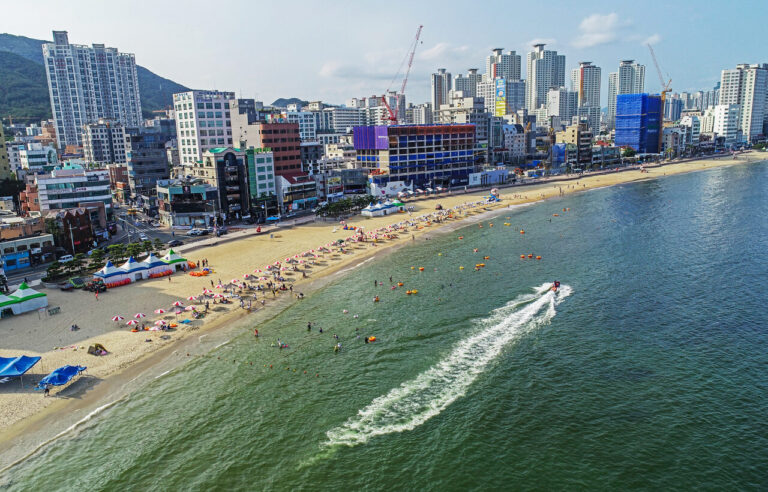
Haeundae Beach is the name most foreigners know before they even arrive in Busan. It stretches 1.5km of wide, clean sand, backed by a wall of luxury hotels, seafood restaurants, and convenience stores open around the clock. The infrastructure here is genuinely impressive: staffed lifeguard towers during swimming season, clean public showers and changing rooms, and more food options than you’ll realistically have time to try.
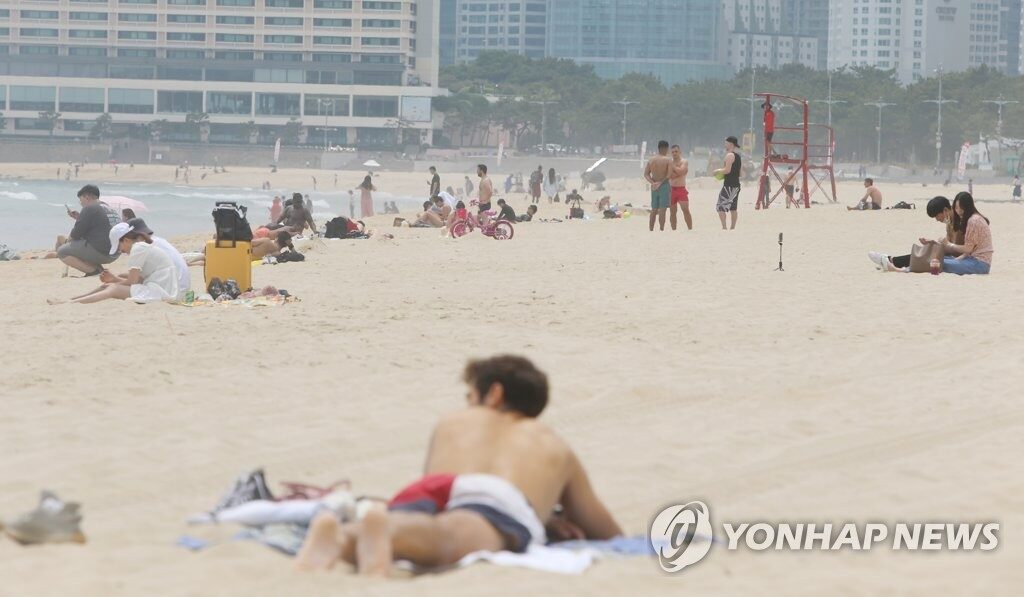
My honest take: Haeundae in peak summer is overrated. July and August bring massive crowds, and the beach gets divided into color-coded swimming zones just to manage the volume of people. Finding a quiet patch of sand before 10am is a challenge; finding one after noon is close to impossible. If this is your only window, arrive early or adjust your expectations going in.
Outside of summer, though, Haeundae fully earns its reputation. Spring and autumn visits hit differently — the sand is clear, the sea stays swimmable well into October, and the surrounding neighborhood (Haeundae Market, the Mipo waterfront strip) has a genuinely pleasant local energy. Winter is underrated: a cold walk along the empty shore followed by a bowl of ramyeon at one of the indoor pojangmacha is one of my favorite things to do in the entire city.
Getting there: Line 2 Haeundae Station, exits 3 or 5 — a 5-minute walk to the waterfront.
Gwangalli Beach — The Local’s Pick and the Best Night View in Busan
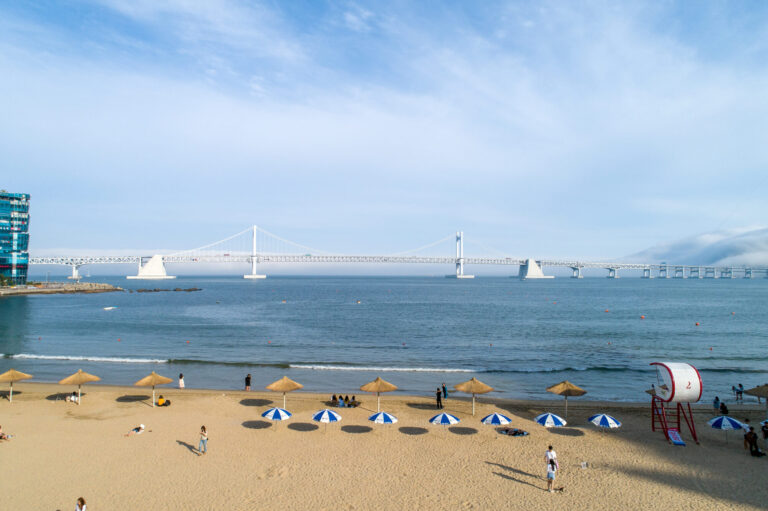
Gwangalli Beach is smaller than Haeundae but consistently outperforms it on atmosphere. The beach faces the Gwangan Bridge, which spans the bay and lights up with a full LED display after dark. It’s one of the best free views in the city, full stop — and you don’t need to do anything except show up and look.
The café and bar strip running along the beach road is a genuine highlight on its own. Third-wave coffee shops, craft beer spots, and izakayas line the street behind the sand, staying busy well past midnight on weekends. The crowd here skews younger and considerably more local than Haeundae’s tourist-heavy mix — which changes the energy significantly. Less selfie-stick, more actual conversation.
The beach itself is narrower, and the swimming isn’t quite at Haeundae’s level in terms of safety staffing and facilities. But for couples looking for an evening out, or anyone who puts atmosphere above raw beach size, Gwangalli consistently wins this comparison. It’s my pick for best night scene, and it’s not close.
Getting there: Line 2 Gwangan Station or Geumnyeonsan Station, both roughly a 10–15 minute walk to the waterfront.
Songjeong Beach — Quiet, Surfable, and the Most Underrated Spot on This List
If you want to actually escape the city, Songjeong Beach is the answer. It sits northeast of Haeundae, tucked between rocky outcroppings, and has a completely different feel — low-rise surf shops, small guesthouses, local cafés that look like they’ve been there for decades, and a pace that the bigger beaches abandoned years ago.
The waves make it Busan’s main surfing spot, and several surf schools operate year-round (prices may vary — verify directly with schools as of 2026). The beach shines brightest in autumn when swells build through September and October. Even if you’re not surfing, the water tends to feel noticeably cleaner and less impacted than at the city’s busier shores. The sand is coarser here, which most surfers prefer and which also filters out a certain type of visitor.
The tradeoff is access. There’s no direct subway stop — the closest is Osiria Station on Line 2, about a 5-minute taxi ride away, or a bus or taxi from Haeundae Station. It’s a minor inconvenience, and it’s also exactly why Songjeong stays quiet. The limited food options near the shore are a feature, not a bug, for the kind of traveler this beach was made for.
Dongbaek Island — The Coastal Walk You’re Probably Walking Past
Technically a peninsula rather than an island, Dongbaek Island juts out from the western edge of Haeundae Beach. It’s free to enter, takes around 30–40 minutes to walk the full perimeter trail, and delivers a completely different experience from the beach next door: coastal cliffs, camellia trees, wide ocean views, and genuine quiet — unusual given how close it sits to one of Korea’s most visited beaches.
Most people walk to the edge of Haeundae’s sand, see the forested headland, and turn around without going in. That’s a mistake. The path along the south-facing cliffs offers some of the best unobstructed sea views in the entire area, and the route past APEC Naru Park is genuinely lovely in afternoon light. Photographers make dedicated trips here specifically for the golden hour shots looking back across the bay.
Since Dongbaek Island shares a subway stop with Haeundae Beach, the most logical strategy is to combine both on the same visit. Walk the island trail first in the morning while the light is good and the paths are calm, then move to the beach as the day warms up. The island itself rarely reaches the crowd levels of the beach beside it, even on busy summer weekends.
Which Beach Is Right for You? A Scenario Guide
Different trips call for different beaches. Here’s a quick decision matrix based on real visits rather than guesswork — match your situation to the recommendation.
| Your Situation | Best Pick | Why |
|---|---|---|
| First visit to Busan | Haeundae | Best facilities, iconic experience, easy subway access |
| Romantic evening for two | Gwangalli | Bridge lights, café strip, atmosphere beats the competition |
| Family with young children | Haeundae | Lifeguards on duty, showers, flat sand, food everywhere |
| Solo traveler seeking quiet | Songjeong | Low crowds, slower pace, surf culture without the fuss |
| Night out with a group | Gwangalli | Bars, late-night cafés, bridge view as a backdrop |
| Photography or walking trip | Dongbaek Island | Cliffs, camellia trees, sea views — minimal crowds |
| Learning to surf | Songjeong | Only beach here with consistent waves and active surf schools |
| Visiting in winter | Gwangalli or Haeundae | Better food access and evening energy offset the cold |
Seasonal Guide: When to Visit Each Beach
Summer (July–August): Peak Season
This is when Busan’s beaches hit maximum capacity. Visit Busan reports that Haeundae alone attracts millions of visitors during this window, and the experience on the sand reflects that. The atmosphere is electric, but it tips quickly into overwhelming — especially on summer weekends when the trains and streets fill up alongside the beach.
If you’re visiting in summer and want a beach experience without the extreme crowd, Gwangalli handles the volume more gracefully, particularly in the evenings. Songjeong is your best option for genuine peace. Lifeguard services are active at Haeundae and Gwangalli during official swimming season (typically late June through late August) — swimming outside designated zones or after hours is not recommended.
Shoulder Season (April–June, September–October): My Recommendation
This is the sweet spot, and I’d push it over summer almost every time. Weather is warm enough for the beach, the summer crush is gone, and the coastal areas feel like they belong to you again. Haeundae in October — the sand nearly empty, the sea still swimmable, the ramyeon stalls setting up along the boardwalk — is one of those quietly lovely experiences that makes Busan easy to come back to.
Autumn is also peak surf season at Songjeong. Swells build reliably through September and October, making it the best time for lessons or for watching more experienced surfers work the break. Gwangalli’s café culture runs year-round and is genuinely more comfortable in the cooler shoulder months, without the oppressive summer humidity.
Winter (November–March): Underrated and Peaceful
Busan winters are mild by Korean standards — noticeably warmer than Seoul — but swimming is off the table for most visitors. What you gain is a completely different coastal experience: quiet beaches, sharp winter light, and a more local crowd. Gwangalli’s food strip stays active year-round, and the bridge light display is honestly more dramatic on a clear, cold night than it is during humid summer evenings.
Dongbaek Island is worth specifically highlighting for winter visits. Camellia trees bloom from roughly January through March, turning the trail into something genuinely scenic. It’s one of the most pleasant walks in Busan during a time of year when many visitors assume there’s nothing to do outdoors — and it costs nothing to find out.
My Final Take
If you only have time for one stop, let the scenario table above make the call. For a first-time visitor with no specific agenda, Haeundae is still the right answer — the scale and convenience are hard to argue with. I’d just add a morning on Dongbaek Island first, since you’re already at the same subway stop and it takes less than an hour.
My personal pick for an evening in Busan? Gwangalli in October — sitting outside a café as the bridge lights come on, watching the bay go dark around the illuminated span. It’s become one of my go-to recommendations for why Busan is worth an extended stay rather than a single-day trip from Seoul. This is Busan beaches compared honestly, and for atmosphere, Gwangalli usually ends the conversation.
Songjeong is the sleeper hit of this list. Skip it if you need full facilities and a direct subway connection. Choose it specifically if you want to remember what a beach is supposed to feel like before the tourism infrastructure took over — because that feeling is increasingly rare, and Songjeong still has it.
Last verified: April 2026 · Sources: Visit Busan, Naver Map
Prices, hours, and details change frequently. Please verify on the official website before visiting.