Best Dwaeji Gukbap in Busan: 3 Spots Compared
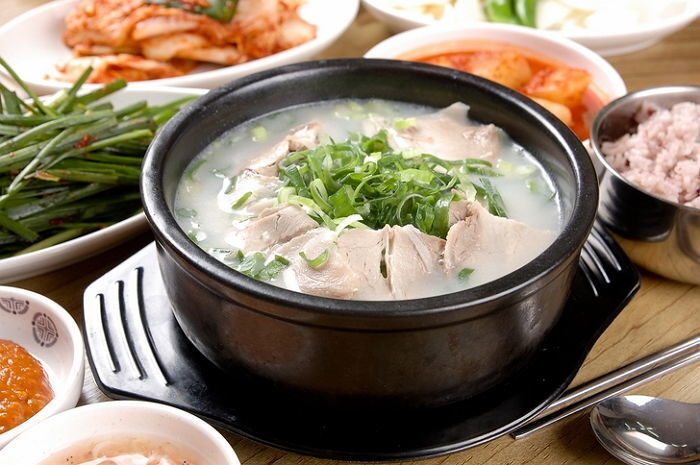
Busan dwaeji gukbap (돼지국밥) has fuelled this port city for generations — a soul-warming pork bone broth served with rice, tender pork slices, and enough kimchi to last a lifetime. Ask any local where to eat it and you’ll get a passionate, slightly offended look if you name the wrong place. I’ve sat down at all three options in this guide on separate visits, and this comparison exists so you can skip the debate and get straight to eating.
Dwaeji Gukbap 101: What You’re Getting Into
Dwaeji gukbap is a pork bone broth soup — slow-cooked for hours until it turns either milky-white (the dominant Busan style) or stays a lighter, cleaner amber. Inside the bowl: thinly sliced boiled pork (usually a mix of lean and fatty cuts), sometimes organs if you order the mixed version (모둠 / modum), and a pile of chopped spring onions. Rice comes either in a separate bowl or already mixed into the broth depending on the restaurant.
The dish has roots in post-Korean War Busan, when refugees from across the peninsula settled in this port city and resourceful cooks made the most of every part of the pig. That history is part of why locals take it seriously — it’s not just breakfast food, it’s identity food.
How to Season Your Bowl
Your bowl arrives intentionally bland. This is not a mistake. On every table you’ll find salt (소금), ground black pepper (후추), and dadaegi (다대기) — a thick, savory-spicy chilli paste that is the secret weapon of a great bowl. Add a small pinch of salt first, stir in half a teaspoon of dadaegi, and taste. Adjust. Most locals go heavy on the pepper. There is no wrong approach, just a personal one.
Rice in or rice out? Locals are split. Mixing your rice directly into the broth creates a thick, unified dish. Keeping it separate lets you eat in alternating bites and keeps the broth’s flavour sharper. Try both and pick a side.
Free Sides and Table Etiquette
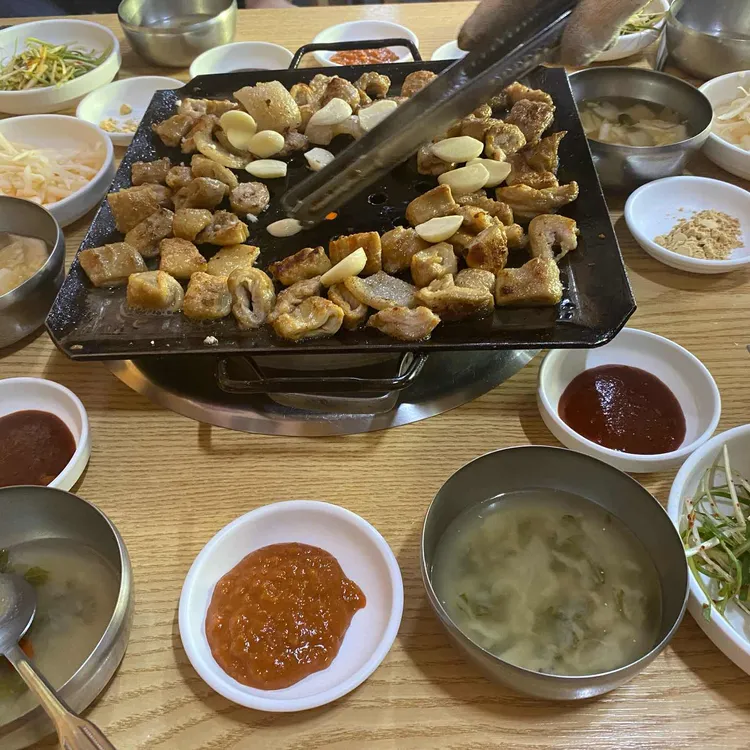
Expect kimchi (baechu), kkakdugi (radish kimchi), spring onion salad, and sometimes saeujeot (새우젓) — a small dish of salted fermented shrimp used as a broth seasoning. Everything is refillable. Point at the empty dish and nod, and more will appear. No tipping, ever. Loud slurping is completely fine. Keep your bowl on the table rather than lifting it to your mouth, and eat at pace — these restaurants turn tables fast.
Quick Comparison: 3 Options at a Glance
Here’s the full breakdown side by side. Scroll down for the deeper dive on each place.
| Restaurant | Location | Price (early 2026) | Broth Style | Portion Size | English Menu | Best For |
|---|---|---|---|---|---|---|
| Bongnaeok (본래옥) | Seomyeon area | ~₩9,000–11,000 | Clear, delicate | Medium | Photo menu only | First-timers, traditionalists |
| Ssiat Dwaeji Gukbap (쌈지돼지국밥) | Multiple branches | ~₩9,000–12,000 | Rich, milky | Large | No | Big appetites, value hunters |
| Local neighbourhood spot | Citywide | ~₩8,000–10,000 | Varies | Varies | Rarely | Adventurous eaters, locals-at-heart |
All prices are estimates as of early 2026 and may have increased. Confirm before visiting.
Bongnaeok (본래옥): The Traditionalist’s Choice
Bongnaeok is the spot I point first-time visitors toward, and it’s earned that role. The broth here runs lighter and more transparent than the thick, opaque style you’ll find at most gukbap houses — subtle, almost delicate, with a clarity that lets the quality of the pork speak for itself. If you’ve never had dwaeji gukbap before, this is a gentler entry point than being hit with a bowl of bone-white richness on your first try.
The pork is well-trimmed, tender, and arrives in thin, even slices. The banchan is solid — good kimchi, reliably fresh spring onion. Being in the Seomyeon area means you’re already in one of the city’s most navigable neighbourhoods, which helps if this is part of a broader afternoon out.
One honest caveat: Bongnaeok is not the quiet local secret it once was. Lunch hours (roughly 12–1:30 p.m.) now draw a tourist-adjacent crowd, and waits can stretch to 20 minutes. Go at 11 a.m. or after 2 p.m. and you’ll avoid the queue entirely. The food is worth the timing game — just plan ahead.
Full details on location, hours, and what to order in our complete Bongnaeok review.
Ssiat Dwaeji Gukbap (쌈지돼지국밥): Maximum Portion, Maximum Broth
Ssiat goes all in on the rich, milky, collagen-heavy style of broth that most people picture when they imagine Busan pork soup. The bowls are genuinely large — noticeably bigger than most competitors — and the price-to-fullness ratio is hard to argue with. The pork cuts come in thicker slices with more of everything: more broth, more meat, more impact per spoonful.
That said, I’ll be direct: some of the hype around Ssiat feels slightly overrated. The broth can tip into overwhelmingly fatty territory, and at busier branches the atmosphere is chaotic in a way that makes you want to eat fast and leave rather than settle in and enjoy the meal. It’s not bad — it just doesn’t always live up to the online discourse.
My honest recommendation: Ssiat is the right pick if you’re hungry, eating on a budget, or specifically want that thick, heavy-broth experience. Skip it if you prefer clean, subtle flavours or a quieter setting. Check which branch you’re heading to, as hours and quality can vary between locations.
Everything you need to plan the visit is in our Ssiat Dwaeji Gukbap review.
What to Expect at Any Dwaeji Gukbap Restaurant
One of the best things about Busan’s dwaeji gukbap scene is its consistency. Walk into almost any local spot and the experience follows a familiar script: you sit down at communal tables or tight two-tops, someone calls your order to the kitchen within 30 seconds of you arriving, and a steaming bowl appears faster than you’d expect.
The condiments, side dishes, and water are already on the table. You don’t need to ask for anything to get started. At many traditional spots there’s effectively one menu item — dwaeji gukbap — with the main variation being the mixed offal version (모둠 / modum). If you want lean pork only, you can request 살코기 (salkogi), though not every place offers this distinction.
Hours are worth checking in advance. Many classic spots open as early as 6 a.m. — it’s genuinely popular as a breakfast and hangover cure — and close by 3–4 p.m. Some well-known places are closed Sundays. Don’t assume dinner service. Naver Map is the most reliable tool for verifying current hours and finding spots near you; search 돼지국밥 and filter by neighbourhood or distance.
Foreigner Tips: Ordering, Sides, and Everything Practical
You do not need to speak Korean to eat dwaeji gukbap. Here is the one phrase that will handle the entire transaction:
돼지국밥 하나 주세요.
(Dwae-ji guk-bap ha-na ju-se-yo.)
“One dwaeji gukbap, please.”
Hold up one finger as you say it. For two bowls, say 둘 주세요 (dul juseyo) or hold up two fingers. Most staff won’t need more than this. For the mixed version with organs: 모둠 주세요 (modum juseyo). For lean pork only: 살코기로 주세요 (salkogi-ro juseyo).
Asking for more sides: Point at the empty dish and say 더 주세요 (deo juseyo — “more please”). This works for kimchi, kkakdugi, anything on the table. You will not be charged.
Tipping: None. Zero. Leaving money on the table is not a local custom and will create a confusing moment for your server. The price of the food is the price of the food, full stop. This applies everywhere in Korea.
Payment: Most places accept both cash and Korean debit or credit cards. Foreign chip-and-PIN cards generally work fine. A small number of very traditional spots are still cash-only — carrying ₩10,000–20,000 as backup is a reasonable habit anywhere in Busan.
Dietary restrictions: Dwaeji gukbap is not suitable for vegetarians, vegans, or those following halal diets. The broth is slow-cooked pork bone and the kitchen handles all pork products. There is no real substitute at these restaurants — it’s a single-protein affair by design.
My Verdict: Which One Is Right for You?
First-time visitor who wants a reliable classic: Go to Bongnaeok. The broth is approachable, the location is central, and it’s a genuinely good introduction without overwhelming a new palate. Read the full address and timing tips in our Bongnaeok review.
Hungry and eating on a budget: Ssiat Dwaeji Gukbap will not leave you with regrets about portion size, and the price-to-fullness ratio is hard to beat. Go in with honest expectations about atmosphere and broth weight. Full Ssiat review here.
Want the most local experience possible: Skip both tourist-tracked spots and walk into any neighbourhood gukbap joint near wherever you’re staying. The quality floor across the city is surprisingly high — a random local pick is rarely a bad one. You probably won’t get an English menu, but 돼지국밥 하나 주세요 will take you exactly where you need to go.
My honest suggestion for a first visit: start with Bongnaeok to calibrate your baseline, then try Ssiat on a second meal if you want to compare styles. Busan dwaeji gukbap is one of those dishes you eat once and immediately want again — so budget time and stomach space for more than one bowl before you leave the city.
Last verified: April 2026 · Sources: Visit Busan, Naver Map
Prices, hours, and details change frequently. Please verify on the official website before visiting.