Jagalchi Fish Market: Busan’s Seafood Heaven
If you want to understand why Busan is a seafood city, spend a morning at Jagalchi Fish Market Busan. Korea’s largest seafood market sits on the waterfront in Jung-gu — and it hits every sense at once. The smell of the ocean, vendors calling out in rapid Korean, tanks of live creatures stacked floor to ceiling. I’ve made the subway ride from Haeundae more times than I can count. It always delivers.
Getting Here from Haeundae
The subway is your best option. From Haeundae Station (해운대역), take Line 2 toward Sasang and transfer to Line 1 at Seomyeon (서면역). Stay on Line 1 toward Dadaepo Beach and get off at Jagalchi Station (자갈치역), Exit 10. The market entrance is about a 3-minute walk from the exit.
Total travel time: around 45–50 minutes. Fare is roughly 1,800–2,000 won with a T-money card — though transit pricing does shift, so check the current rate when you visit. If this is your first time on the metro, our Busan subway and T-money guide covers everything you need.
Taxi from Haeundae takes about 20–25 minutes and runs around 12,000–18,000 won depending on traffic. Use Naver Map to find Jagalchi Market and show your driver the screen — no Korean required.
What’s Inside the Market
The market splits into two main sections: the outdoor stalls running along the street, and the large modern building — 자갈치시장 (Jagalchi Sijang) — right on the waterfront at 52 Jagalchihaean-ro, Jung-gu, Busan.
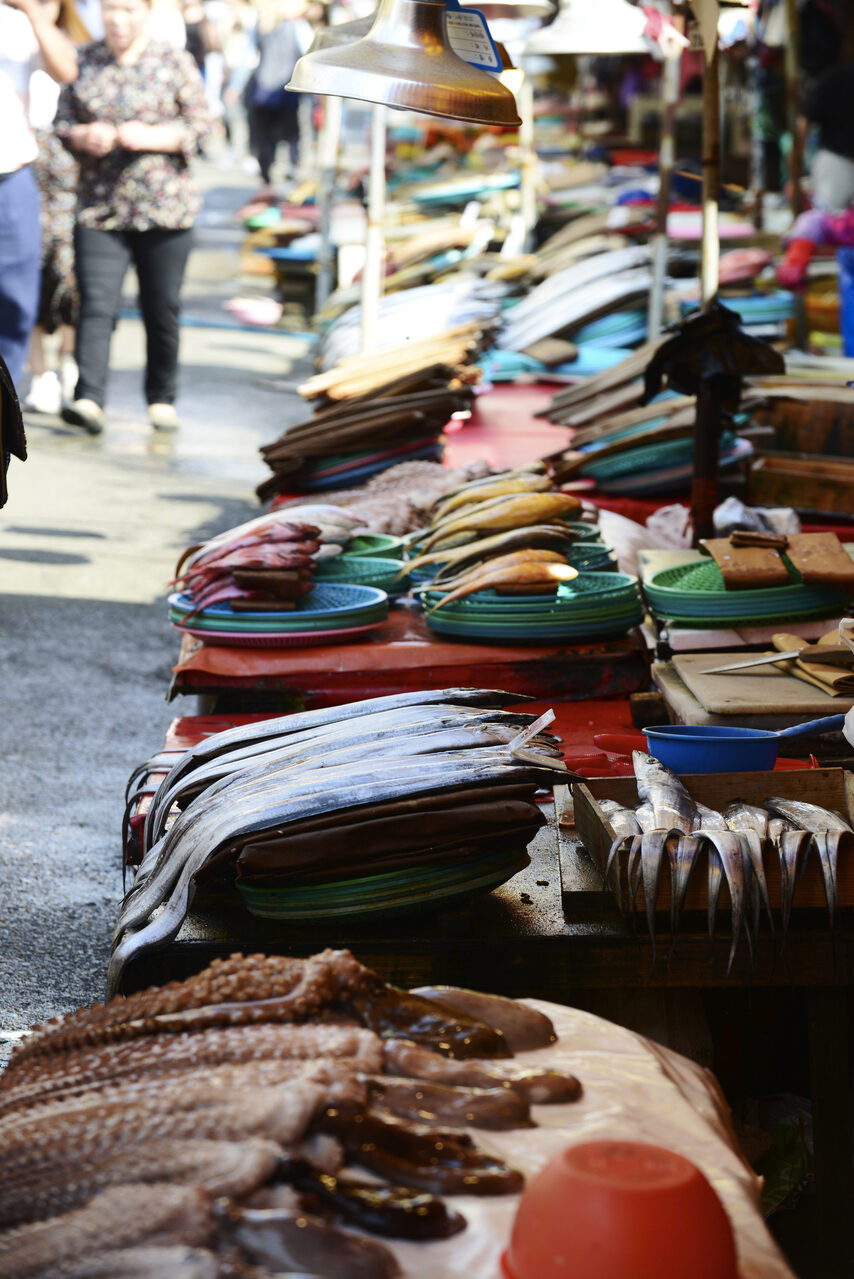
Outdoor area: Rows of ajumma (아주머니, middle-aged women) vendors sit behind tanks and trays of fish, shellfish, and dried seafood. This is where most of the local action happens. You’ll see things that never make it onto restaurant menus.
Indoor building: The ground floor has more vendors selling live and fresh seafood. Go up to floors 2–4 and you’ll find full restaurants where you bring your purchase from downstairs to be prepared and served.
- Hours: Roughly 8:00 AM – 10:00 PM daily as of late 2025 — worth confirming before you visit, as individual stalls can close earlier
- Best time to visit: Late morning, around 10–11 AM — fresh stock, before the lunch crowd hits
- Closed: First and third Tuesday of each month (some vendors only)
How to Order Live Seafood — The System
This is the part that confuses most first-time visitors. The process is simpler than it looks:
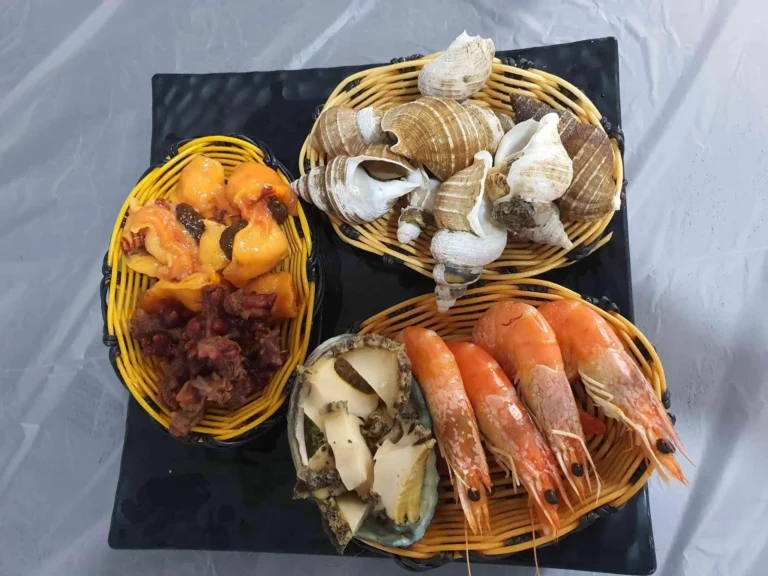
- Browse the ground floor tanks. Common picks are 광어 (gwang-eo, flatfish/flounder), 문어 (mun-eo, octopus), 전복 (jeonbok, abalone), and 소라 (sora, conch).
- Agree on a price before anything is cut. The vendor will weigh the fish and quote you. A little back-and-forth is normal, but don’t push hard — these vendors work long days.
- Pay the vendor. They’ll slice or prepare the seafood on the spot. Raw flatfish becomes 회 (hoe, pronounced “hwe”) — thin slices arranged on a plate.
- Take it upstairs to any restaurant on floors 2–4. You pay a 상차림비 (sangcharim-bi, table service fee) of around 8,000–15,000 won per person as of late 2025. This covers your table, banchan (반찬, side dishes), and a pot of 된장찌개 (doenjang jjigae, fermented soybean soup).
Fair warning: the table service fee catches a lot of people off guard. You’ve already paid for the fish downstairs — then there’s a separate charge upstairs on top of that. It’s not a scam; it’s just how the system works. But budget for it going in, or it’ll feel like a surprise you didn’t need.
You don’t need Korean to do any of this. Point at what you want, hold up fingers for quantity, look for prices displayed at each stall. Most vendors have a workable system with foreign visitors already figured out.
What to Eat and What It Costs
Here’s what to order and what to budget — prices are approximate as of late 2025 and can shift with season and supply:
| Item | Korean | Price (approx.) |
|---|---|---|
| Raw flatfish (flounder) | 광어회 (gwang-eo hoe) | 30,000–50,000 won (feeds 2) |
| Octopus | 문어 (mun-eo) | 20,000–40,000 won |
| Sea squirt | 멍게 (meongge) | 10,000–15,000 won |
| Conch | 소라 (sora) | 10,000–15,000 won |
| Table service fee (per person) | 상차림비 (sangcharim-bi) | 8,000–15,000 won |
Budget around 30,000–50,000 won per person total. Not the cheapest meal in Busan — but you’re paying for seafood that was alive twenty minutes ago.
The flatfish hoe is the classic starting point. Wrap a slice in lettuce with a dab of 쌈장 (ssamjang, spicy fermented paste) and a sliver of garlic. Vinegared gochujang on the side for dipping. If you want something more adventurous, try the 멍게 — sea squirt has a strong iodine flavor that’s very specific to this coast. Try it once and decide for yourself.
Tips Before You Go
Bring cash. Ground floor vendors almost always want cash. Some upstairs restaurants accept cards, but don’t count on it. See our guide on paying in Korea with cash, card, and phone so you’re not caught short.
Come with at least one other person. Buying one small fish for one person feels awkward — and works out more expensive per head. This place is built for sharing.
Vendors will call out to you. A smile and a wave is enough. You’re allowed to walk the full length of the outdoor stalls before deciding where to stop.
Wear shoes you don’t mind getting wet. The outdoor area can be slippery underfoot — especially in the morning when stalls are still being set up.
Navigate with Naver Map. Search 자갈치시장 and it takes you straight to the main building entrance. Our Naver Map guide in English covers setup if you haven’t done it yet.
One thing worth knowing before you arrive: the market is run almost entirely by women. The Jagalchi ajumma are a point of real pride in Busan — vendors who kept this place alive through difficult decades after the Korean War. It gives the market a particular character that goes well beyond the seafood itself. And if you’re still hungry after, Nampodong’s street food scene is a short walk away.
Last verified: April 2026 · Sources: Visit Busan, Naver Map – Jagalchi Market
Prices, hours, and details change frequently. Please verify on the official website before visiting.